Statementステートメント Updated 2026-06

Statementステートメント

I

Epistemology認識論

Mineralize names the slow substrate of perception: layered, sedimented, the stratum on which culture and body settle into shape. Crystallize names the rare event on that substrate — the moment something condenses into form, into recognition, into image. To see is to crystallize on a mineralized ground. Topophilia, in Yi-Fu Tuan's sense, is then sediment.

Mineralize(鉱物化)は知覚の遅い基層を指す。層を重ね、堆積し、その上に文化と身体が形を結ぶ地層である。Crystallize(結晶化)はその基層に起こる稀な事象——何かが形へ、認識へ、像へと凝縮する瞬間。見るとは、鉱物化した地の上で結晶化することだ。Yi-Fu Tuanの言うトポフィリアは、ここでは堆積物として現れる。

II

Medium媒体

I work with what the digital cannot replace. PLATEAU gives a city its mesh; PETG gives it weight. A printed crystal of Shibuya holds 2018 footprint data the way limonite holds the iron that once was pyrite — a pseudomorph, the city in the chemistry of its own forgetting. The objects emerge from a particular moment: post-growth Japan, where urban form mutates without expanding, where development is substitution rather than accumulation. AI imagery has entered this loop — Midjourney, Meshy, synthetic surfaces of the present mineralized into objects that remember them.

I think of this practice as a geology of sculpture, indebted to media geology (Parikka, Zielinski): media not as channels but as strata, the city not as plan but as deposit.

デジタルが代替できないものを扱う。PLATEAUは都市にメッシュを与え、PETGはそれに重さを与える。渋谷の結晶プリントは、2018年のフットプリントデータを、リモナイトがかつての黄鉄鉱の鉄を保持するように抱える——仮晶(pseudomorph)、自らの忘却の化学のなかにある都市。これらの作品は特定の時点から発する:ポスト成長期の日本、都市形態が拡張せず変異し、開発が蓄積ではなく置換として進む時点である。AI生成のイメージがこのループに加わる——MidjourneyやMeshy、現在の合成的表面が、それを記憶する物体として鉱物化される。

この実践を「彫刻の地質学」として捉える。メディア地質学(Parikka、Zielinski)に連なる試み——メディアを伝達路ではなく地層として、都市を計画ではなく堆積物として見る。

Modulation³ — Series NoteModulation³ — シリーズ解題

The Modulation³ series is a sculptural practice that modulates geospatial data — OpenStreetMap, Project PLATEAU, pedestrian flow records, and other open data layers — into the crystal morphologies of minerals.

The concept of modulation takes its reference point from Gilbert Simondon's theory of individuation. In contrast to a mode of making in which material properties are poured into a mold (moule) set in advance by the maker's concept, modulation is the logic by which form emerges from the process of the material itself. In this series, the principle is that form arises through an engagement with the structure of the data, and the logic of crystallization — purification, condensation — is selected in response to the singularity of each data environment.

The central morphological motif is the mineral. In particular, pseudomorphism — the mineralogical phenomenon in which one substance is replaced by another while preserving its outer form — is used as a metaphor for the transposition of digital data into a mineral phase.

The practice takes Jussi Parikka's Geology of Media as a reference point, and is an attempt to reread digital media in the register of geological time and materiality. The numerical strata that continue to accumulate in post-growth society are fixed as the condensed, once-occurring phase of the crystal, and their singular points are presented.

「Modulation³」シリーズは、OpenStreetMap、PLATEAU、人流オープンデータなどの地理空間データを、鉱物の結晶形態へと変調する造形実践である。

変調(modulation)の概念はジルベール・シモンドンの個体化論を参照点とする。あらかじめ制作者が設定したコンセプトという鋳型(moule)に素材の特性を流し込む造形のあり方とは異なり、変調は素材そのもののプロセスから形態が出現する論理である。本シリーズではデータの構造そのものへのアプローチから形態が立ち上がることを原則とし、各データ環境の特異性に応じて結晶化(Crystallization:純化・凝縮)の論理が選択される。

中核となる造形モチーフは鉱物である。とりわけ pseudomorphism(仮晶)──ある物質が外形だけを保ったまま別の物質へと置換される鉱物学的現象──を、デジタルデータが鉱物相へと転位する過程のメタファーとして用いる。

本実践はユッシ・パッカの「メディア地質学(Geology of Media)」を参照点とし、デジタルメディアを地質的時間と物質性の射程で捉え直す試みでもある。ポスト成長社会において堆積し続ける数値の層を、結晶という凝縮された一回性の相として固定し、その特異点を提示する。

— Three Modes— 三様態

All three depart from the same amorphous pre-state — what Simondon calls the pre-individual. They are not stylistic choices but distinct relations to time. The current works operate principally in the mode of crystallization; biomineralization and diffraction are developed selectively where the data environment calls for them.

三様態はいずれも同じ無定形の前個体的状態(Simondon)から発する。それは様式の選択ではなく、時間との異なる関係である。現状の作品群は主としてCrystallizationの様態で展開し、Biomineralization・Diffractionはデータ環境の要請に応じて選択的に展開される。

Research — Doctoral Framework研究 — 博士論文の枠組み Hiroshima City University

From a Digital-Data Environment to Modulated Sculptureデジタルデータ環境から Modulated Sculpture へ

Crystallization of geospatial data and a media-geological inquiry地理空間データの結晶化とメディア地質学的考察

The practice is developed alongside doctoral research in the Sculpture Laboratory, Graduate School of Arts, Hiroshima City University. Its guiding question: how can sculpture in the digital-data environment be characterized through three lenses — medium, place, and reproduction? The position is research through art — making is treated not as an object of external analysis but as a process of knowledge, tested in a loop between theory and practice.

本制作は、広島市立大学大学院 芸術学研究科 彫刻研究室における博士研究と並行して展開している。その問いは——デジタルデータ環境における彫刻は、媒体・場所・複製という三つの観点からいかに特徴づけられるか。立場は「芸術を通じた研究(research through art)」であり、制作実践を外部観察の対象ではなく知の生成過程として位置づけ、理論と実践の往還のなかで検証する。

— Three Working Hypotheses— 三つの作業仮説

The three are not independent: the field doubles because the medium has become composite, and the composite medium relativizes the original. All three are driven by the intervention of a third layer — image-spatial movement, the signal-processing logic of modulation (chorus, flanger, phaser) carried from sampling into 3DCG and digital fabrication.

三仮説は独立せず相互に連関する。場が二重化するのは媒体が複合化したからであり、媒体の複合化がオリジナルを相対化する。いずれも第三層——映像空間的動作、サンプリング以降の modulation(chorus, flanger, phaser)の信号処理的論理が 3DCG とデジタルファブリケーションへ転位したもの——の介入によって駆動される。

— Modulating— Modulating

The three hypotheses are integrated as Modulating, the core method of the third layer, after Cache's inflection and Deleuze's modulation: Modeling (internal singularity alone — a weightless construction of data), Simulating (external singularity assigned through a relation to gravity), and Materializing (interval and difference arising in physical output). Read this way, geospatial open data is not immaterial "information" but an assembly of minerals and energy mined from the earth — the ground of a media-geological practice.

三仮説は、第三層の核心的方法論「Modulating」として統合される。カシュの inflection 論とドゥルーズの modulation 概念に接続し、三契機は——Modeling(内在的特異性のみのデータ構築=無重力状態)/Simulating(重力方向との関係づけによる外在的特異性の付与)/Materializing(物理的出力における間隔と差異の発生)。この視座において地理空間オープンデータは非物質的な「情報」ではなく、地球から採掘される鉱物とエネルギーの集合体として捉え直される——メディア地質学的な制作の地である。

Works作品 2026
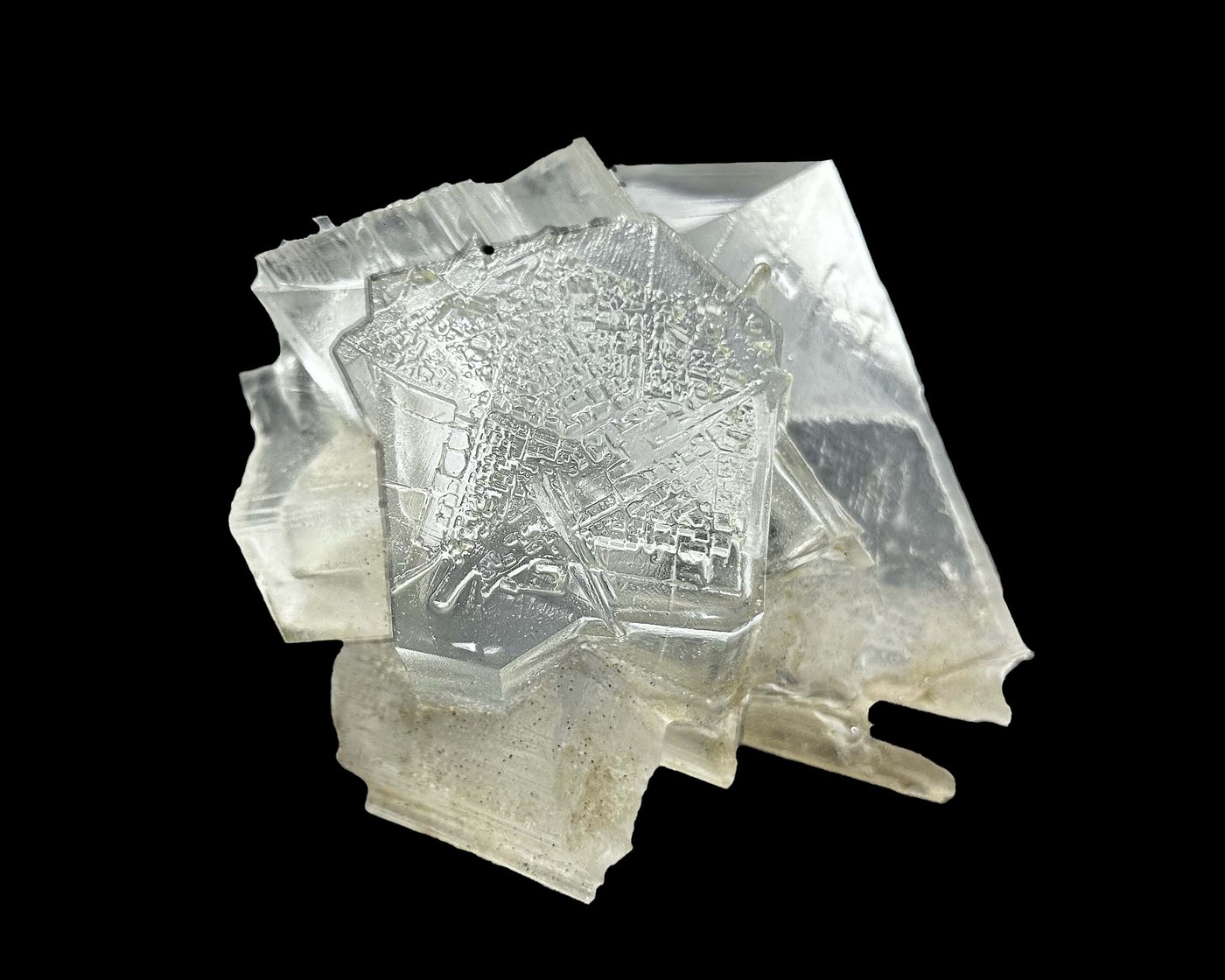
Modulation³ — Shibuya³, REAL crystal (PETG, iron-powder oxidation patina)
In Production制作中 2026

Modulation³ — Shibuya

AI Mineralization · FeOOH · Shibuya³

Dimensions
H120 × W200 × D100 cm
Medium
PETG (3D printed), iron-powder oxidation patina, monitor (single-channel video, 3-min loop, color, silent)PETG(3Dプリント)、鉄粉酸化パティナ、モニター(シングルチャンネル映像、3分ループ、カラー、無音)
Data
PLATEAU (2020–2025, overlaid and divided by staying-population zones)PLATEAU(2020–2025、滞在人口ゾーンで重畳・分割)
AI
Midjourney v6.1 · Meshy AI · scenarios: inboundization / liminalization / ethnicizationMidjourney v6.1 · Meshy AI · シナリオ:インバウンド化/リミナル化/エスニック化
Context
FabCafe Tokyo Creative Residency vol.3「AI-Dada」FabCafe Tokyo Creative Residency vol.3「AI-ダダ」

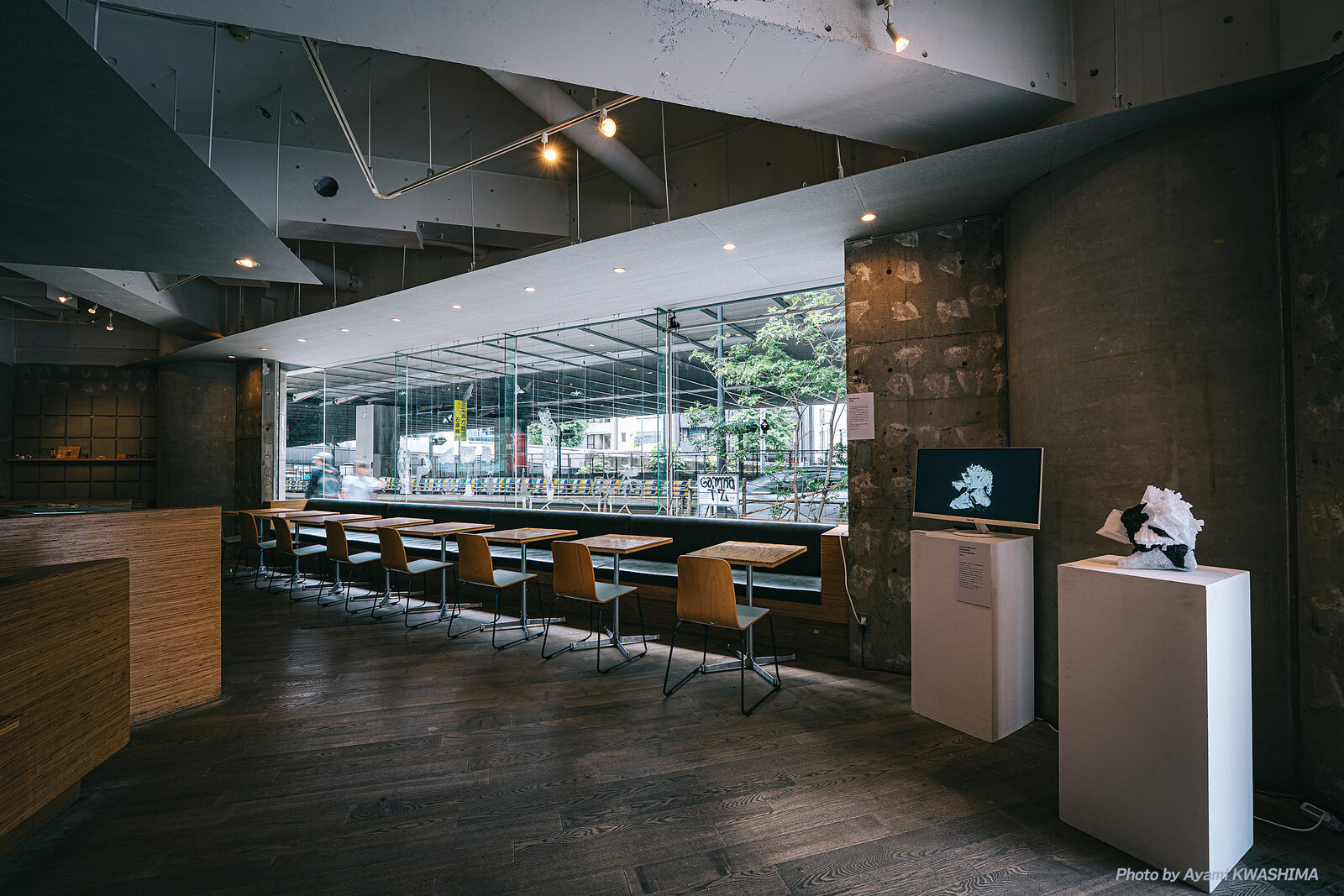
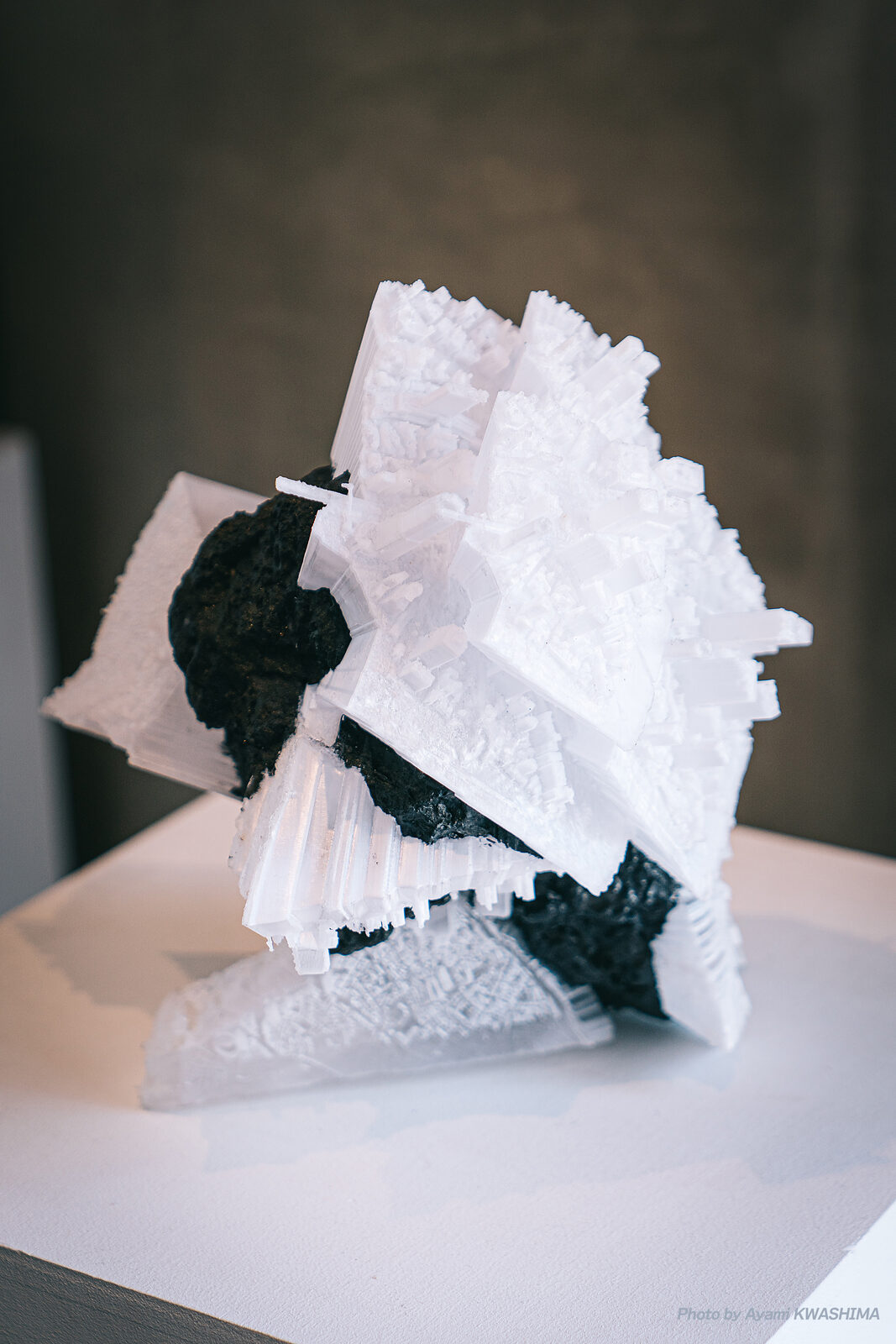
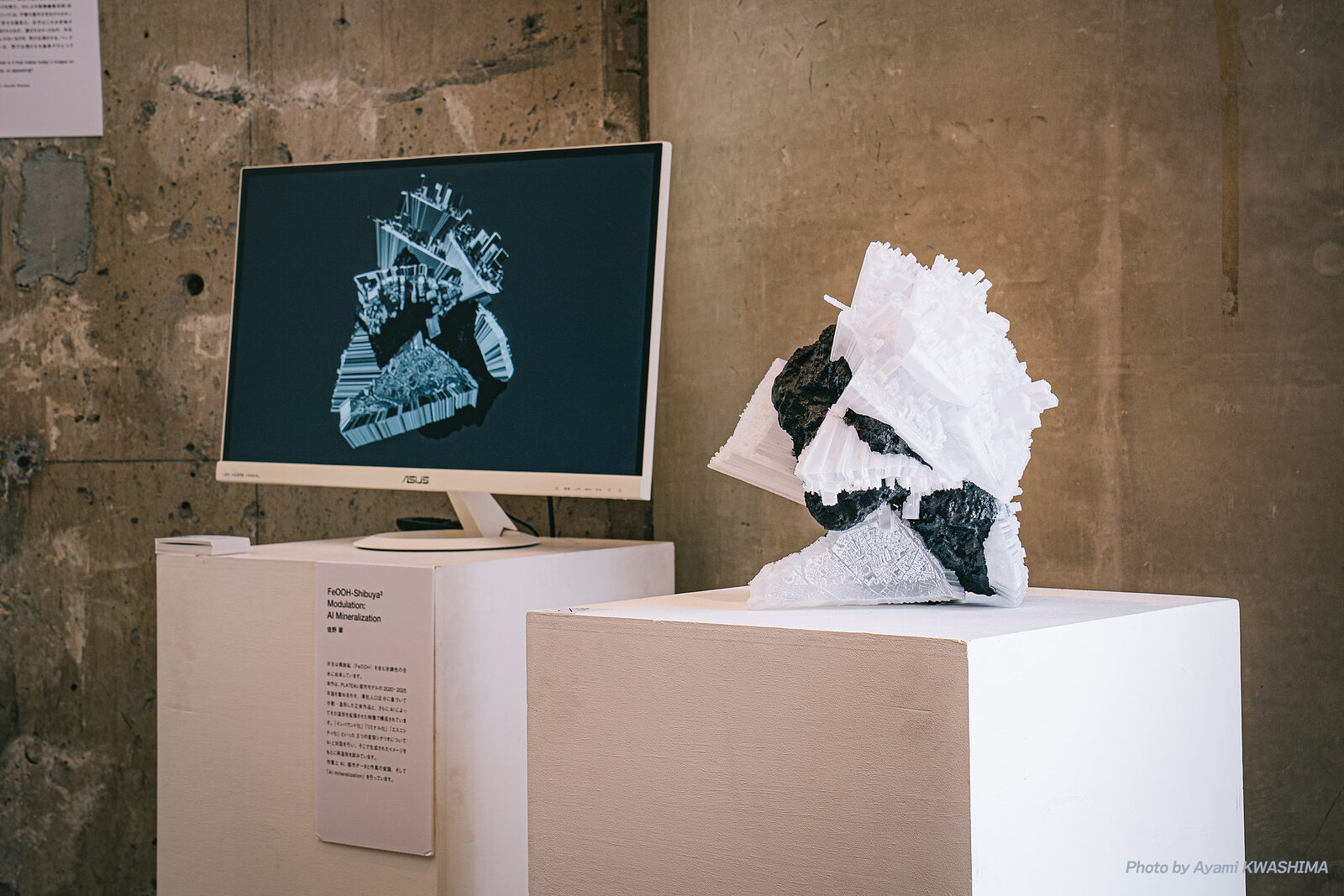
Among several etymologies, one reads Shibuya as a relic of iron — the bitter-stained marshes its early inhabitants encountered, where goethite and limonite stained water and soil. The work pairs two sculptures: a REAL crystal built from PLATEAU 3D city model data (2020–2025), overlaid and divided by staying-population zones, printed in PETG and treated with an iron-powder patina that re-mineralizes as it sits; and its HALLUCINATED counterpart, generated by Midjourney v6.1 and Meshy AI — the city the model imagines when asked for Shibuya.

Both are pseudomorphs: the form of one mineral filled with the substance of another. The data Shibuya is filled with synthetic surface; the synthetic Shibuya is filled with data. Between them, a monitor cycles AI stills of a district that exists nowhere. The piece treats AI not as image-production but as a chemistry of remembering.

渋谷という地名の語源には諸説あるが、その一つは鉄の記憶として読まれてきた——初期の住人が出会った、針鉄鉱(goethite)と褐鉄鉱(limonite)に染まり、渋い味を帯びた湿地帯。本作は二つの彫刻を対にする。PLATEAUの3D都市モデルデータ(2020–2025、滞在人口ゾーンで重畳・分割)から構築し、PETGでプリント、鉄粉パティナを施してそれ自体が再び鉱物化していくREALな結晶。そしてMidjourney v6.1とMeshy AIにより生成された、モデルが「渋谷」と呼びかけられたときに想起する都市——HALLUCINATEDな対応物。

両者ともに仮晶(pseudomorph)である:ある鉱物の形が別の鉱物の実質で満たされた状態。データの渋谷は合成的表面で満たされ、合成的な渋谷はデータで満たされる。両者のあいだで、モニターはどこにも存在しない街区のAI静止画像を循環させる。本作はAIを画像生成ではなく、記憶の化学として扱う。
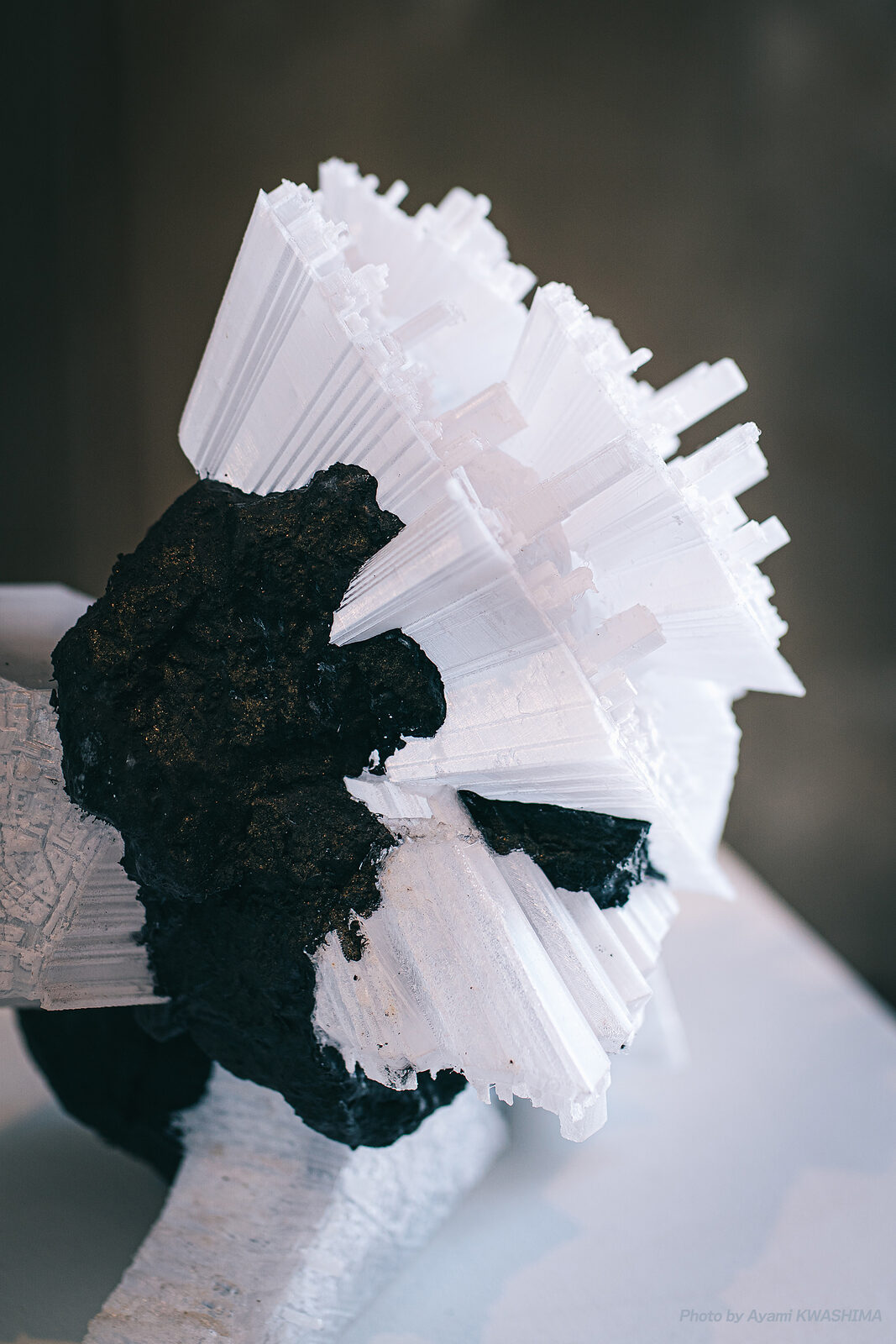
Shibuya³ — REAL crystal, detail
Shibuya³ — HALLUCINATED counterpart on monitor (Midjourney v6.1 · Meshy AI)
Shibuya³ — installation, FabCafe Tokyo
鰭地 / From Fin to Formation — landscape installation render
Proposal · Unbuilt提案 · 未制作 2026

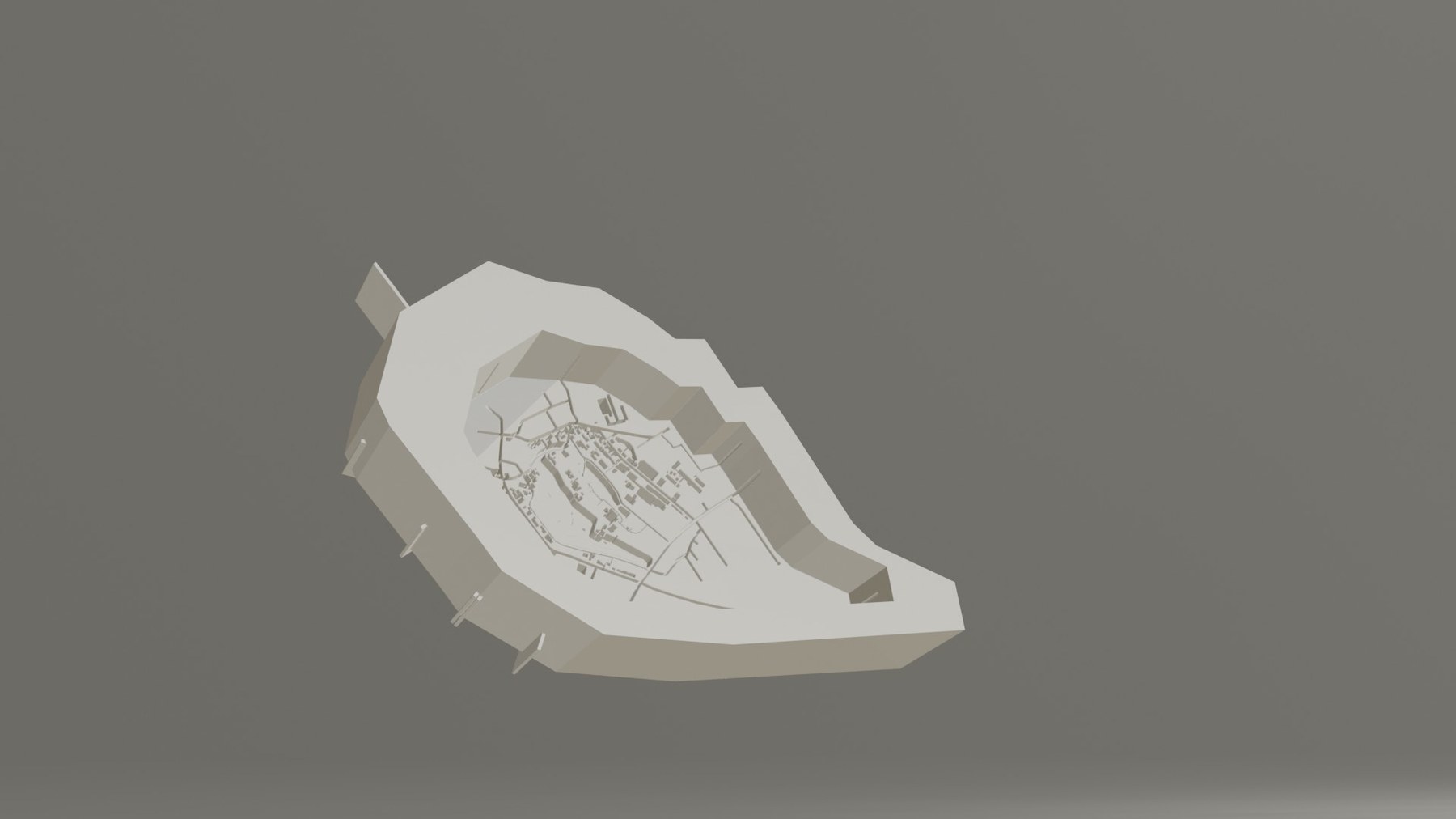
鰭地 / From Fin to Formation

Sakuraishi · Cordierite Pseudomorph · Tamba Belt

Medium
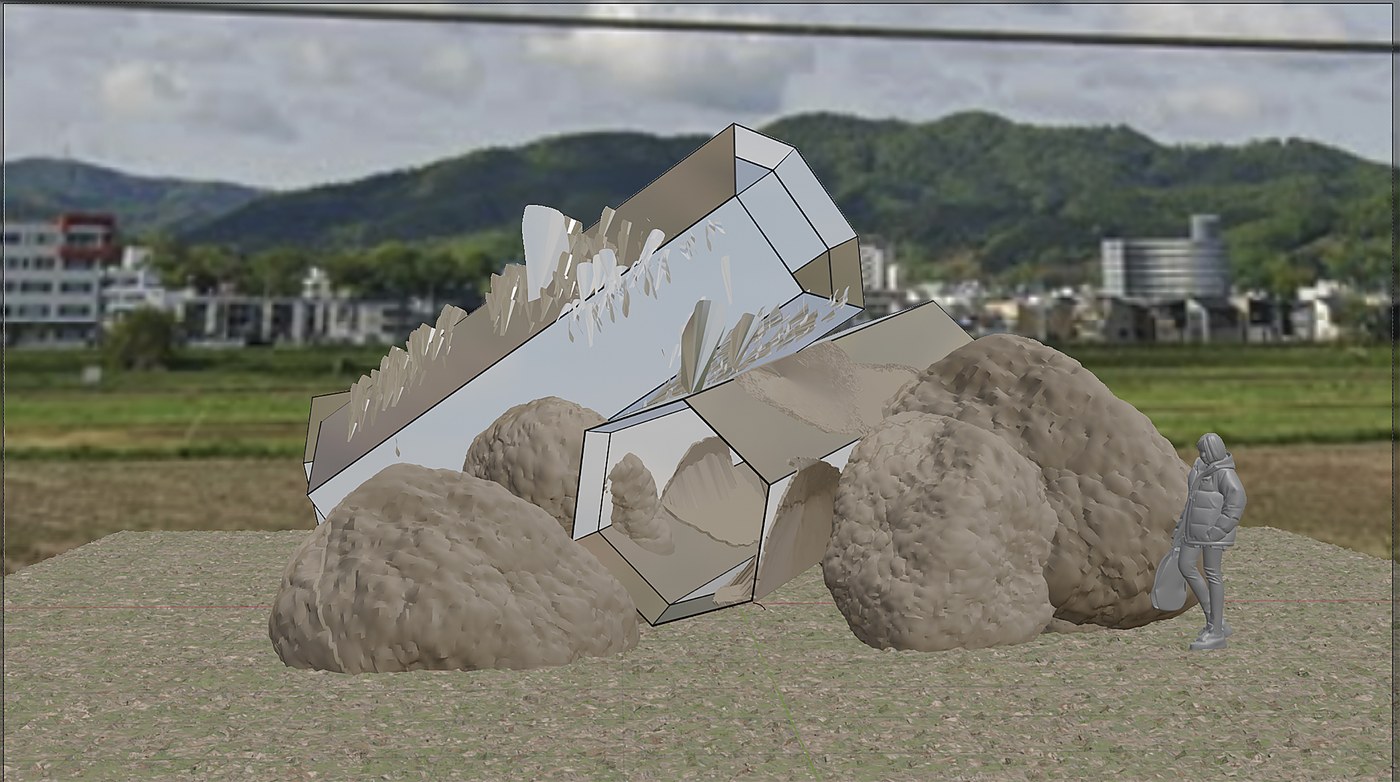
PETG hexagonal pillars (×3), clay (workshop-stamped layer), earthwork moundingPETG六角柱(×3)、粘土(ワークショップ・スタンプ層)、盛土
Scale
Total height < 4 m (engineered to step around Building Standards Act threshold)総高4m未満(建築基準法の閾値を回避する設計)
Reference
Sakuraishi (cordierite pseudomorph) · Tamba-belt chert · Simondon, individuation桜石(菫青石仮晶)・丹波帯チャート・シモンドン「個体化」
Context
Kameoka Mist Art Festival — Art Sprout 2nd-stage selectionかめおか霧の芸術祭 — Art Sprout 2次選考

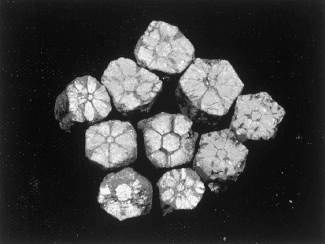
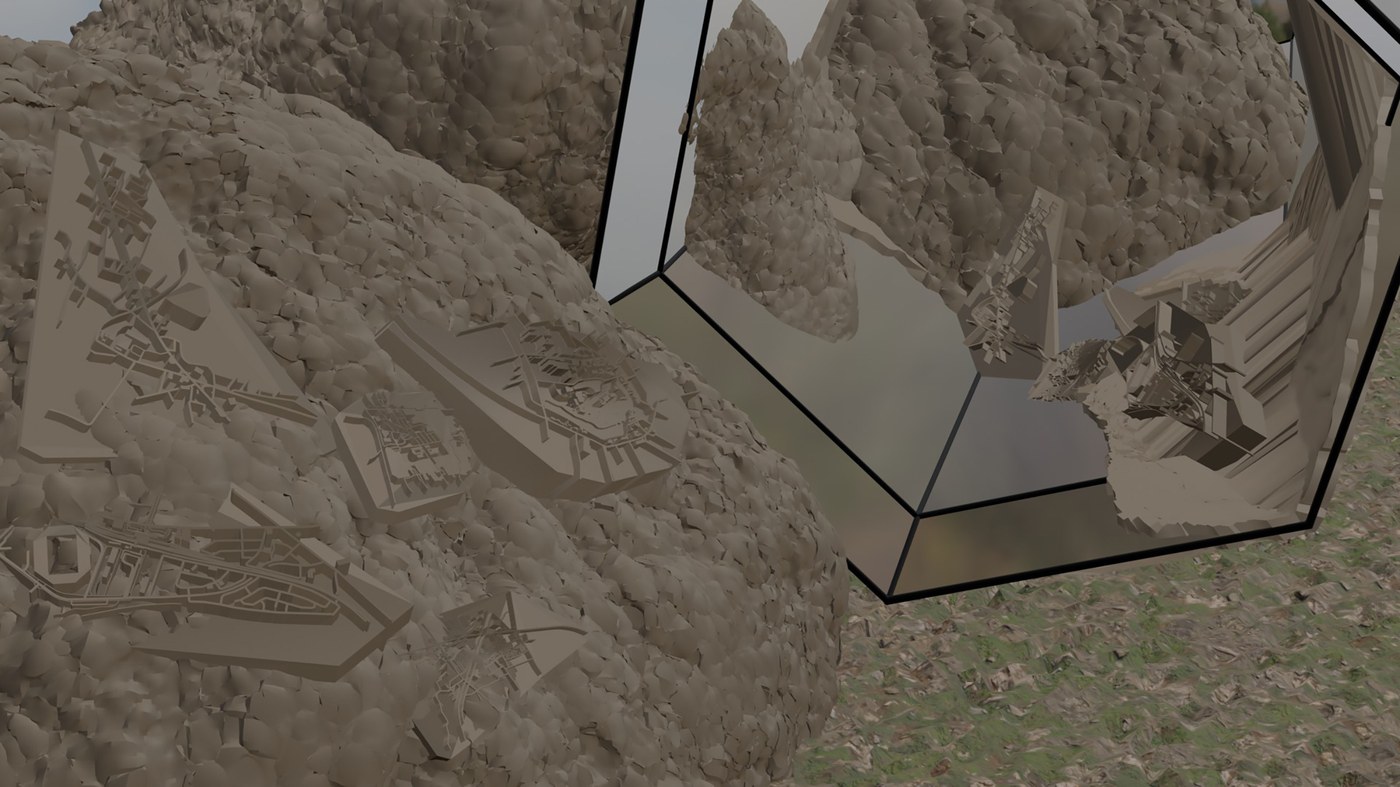
Sakuraishi — cherry stone — is a Kameoka mineral: a hexagonal pseudomorph in which cordierite has replaced the original crystal while keeping its six-fold geometry. The work installs three PETG pillars on this geometry, hexagonal in section, surface stamped with clay during community workshops as material accretes onto digital form.

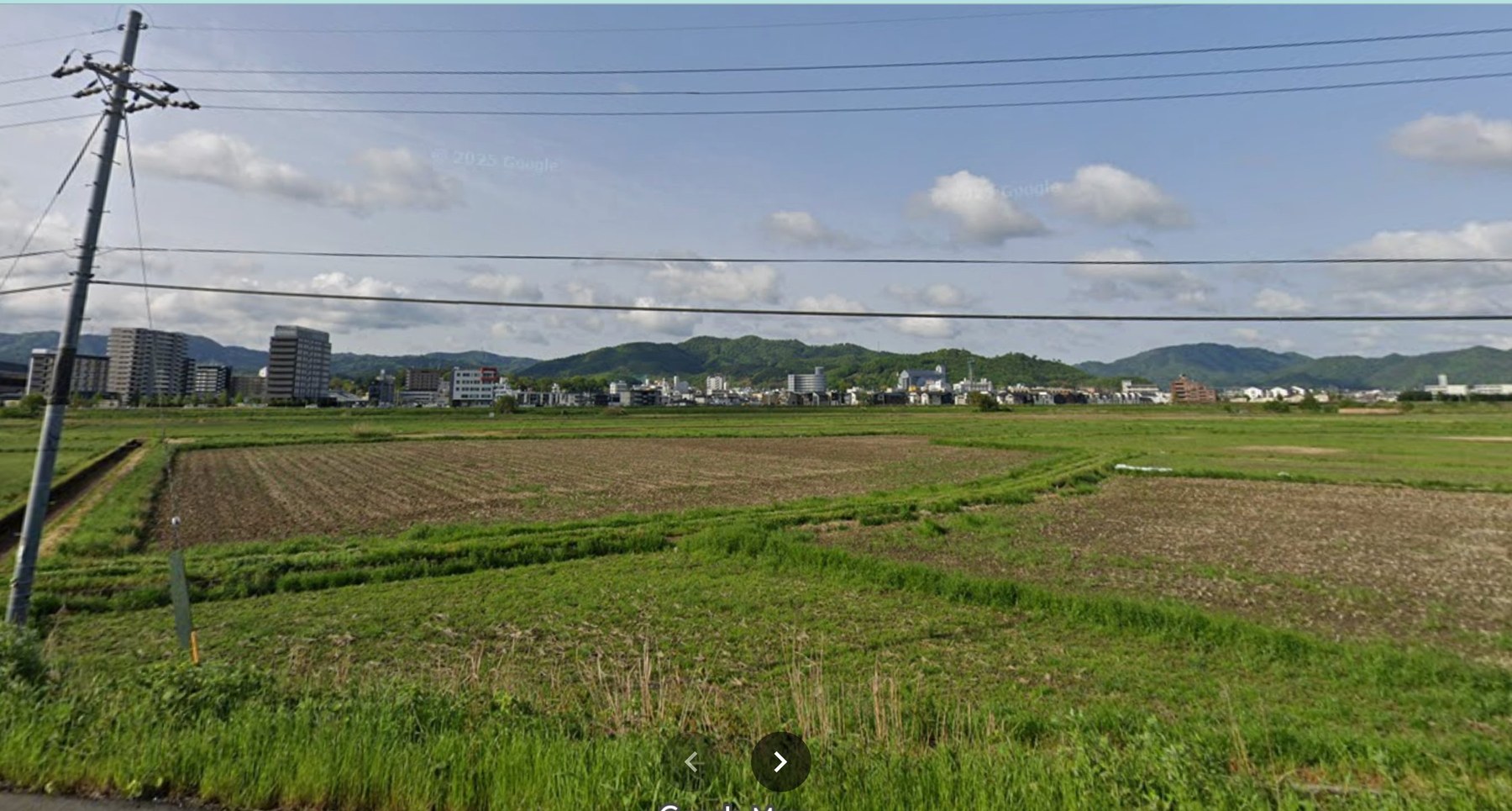
Total height under 4 m, anchored by stakes, concrete weights, and earthwork mounding — engineered to step around the threshold of the Building Standards Act. At deinstallation the sculptures return to earth, the clay layer dispersing back into the field. The piece reads landscape as Tamba-belt sediment: chert, slate, and the slow individuation Simondon describes — form emerging from a metastable substrate rather than imposed onto a passive ground.

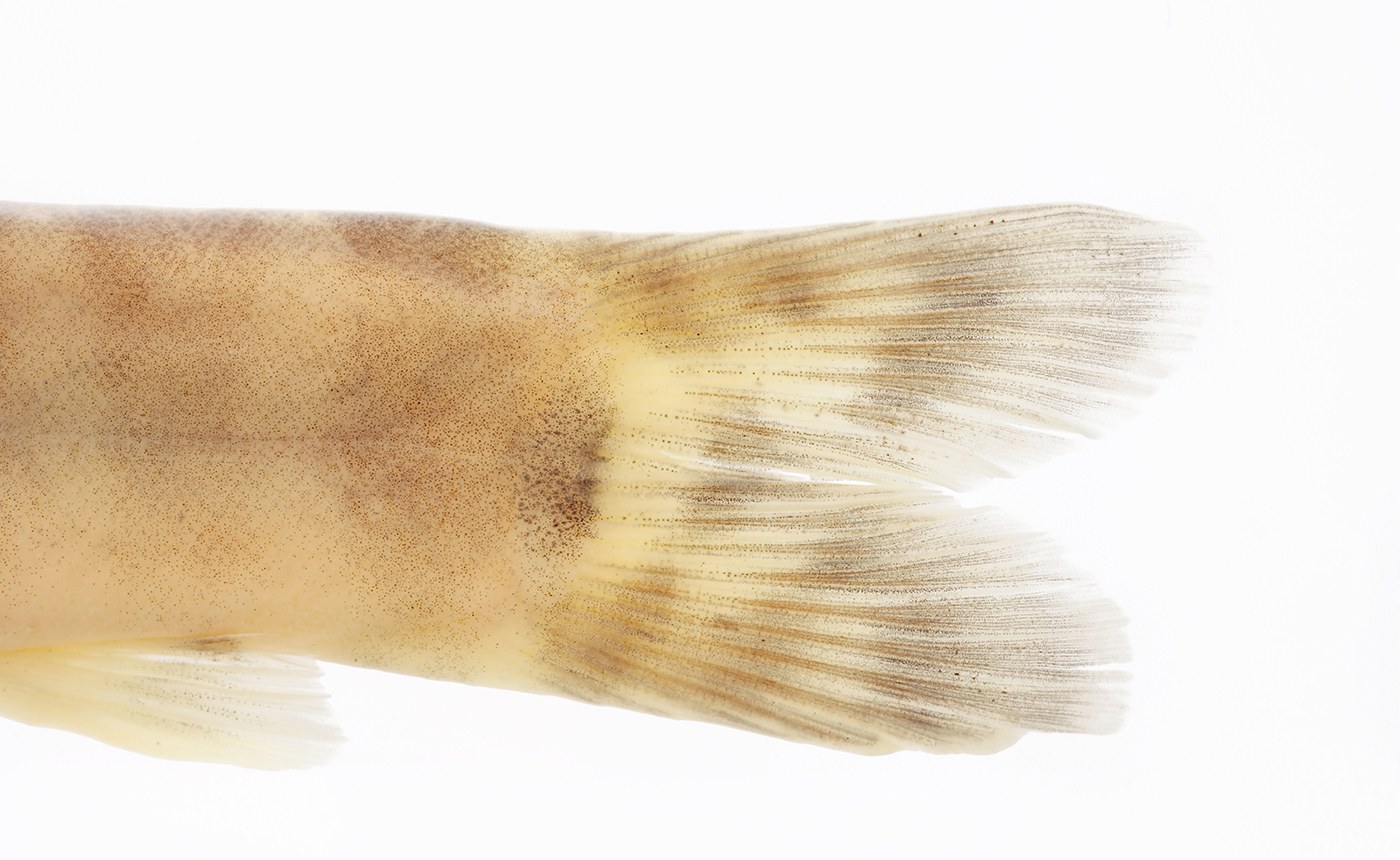
The fin is a transitional shape: between water and land, between body and bedrock. The work asks what kind of formation a sculpture can be when it knows it will be a deposit.

桜石は、亀岡で見られる鉱物である——六角形の仮晶であり、菫青石(cordierite)が元の結晶を置換しつつ、六回対称の幾何を保持している。本作はこの幾何の上に、断面が六角形のPETGの柱を三本設置する。表面はコミュニティ・ワークショップにおいて粘土でスタンプされ、デジタルな形象に物質が積層していく。

総高は4m未満に抑え、地中ペグ・コンクリートウェイト・盛土により固定する——建築基準法の閾値を回避する設計である。撤去時には彫刻は土へと還り、粘土層は再び大地に拡散する。本作は風景を丹波帯の堆積物——チャート、粘板岩——として読む。シモンドンが個体化と呼ぶ過程——受動的な基盤に押しつけられるのではなく、準安定な基層から発する形態。

鰭とは推移的な形である:水と陸のあいだ、身体と岩盤のあいだ。彫刻が自身が堆積物となることを知っているとき、それはどのような形成(formation)でありうるか。

Sakuraishi — cordierite pseudomorph specimens, mineralogical reference
Sakuraishi · ref.
Ayumodoki (Parabotia curtus) caudal fin — conceptual seed for fin to formation
Ayumodoki fin · ref.
Sculpture detail — engraved city maps on accretive landform
Abstracted form study — single sculptural element
Kameoka — Tamba-belt landscape, site context
Plateau / and / Axis — installation, Former Bank of Japan Hiroshima Branch storefront
Realised実現 2026 · 02

Plateau / and / Axis

Heiwa Odori · Human Flow × PLATEAU

Dimensions
3 × 10 × 3 m
Medium
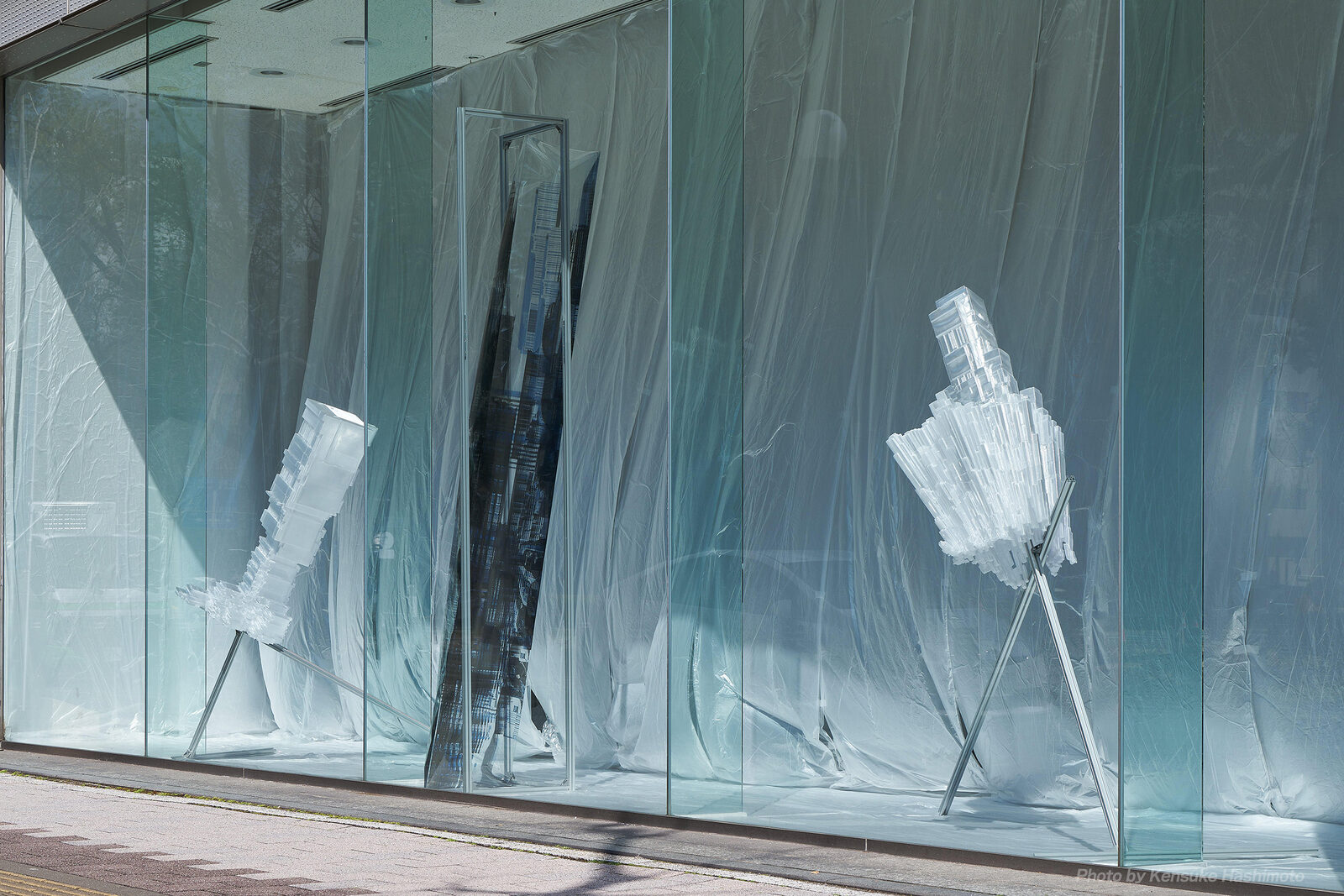
PETG (FFF 3D print), aluminium frame, transparent film column with images (Hiroshima — legacy landmarks and redevelopment districts)PETG(FFF 3Dプリント)、アルミフレーム、透明フィルム柱(広島:旧来のランドマークと再開発地区の画像)
Data
Pedestrian flow CSV (Tokyo & Hiroshima, August 2018) · PLATEAU 3D city model人口流動CSV(東京・広島、2018年8月)・PLATEAU 3D都市モデル
Reference
Deleuze & Guattari, "plateau"ドゥルーズ+ガタリ「プラトー」
Context
Heiwa Odori Art Festival, Former Bank of Japan Hiroshima Branch — February 2026平和大通り芸術祭、旧日本銀行広島支店 — 2026年2月

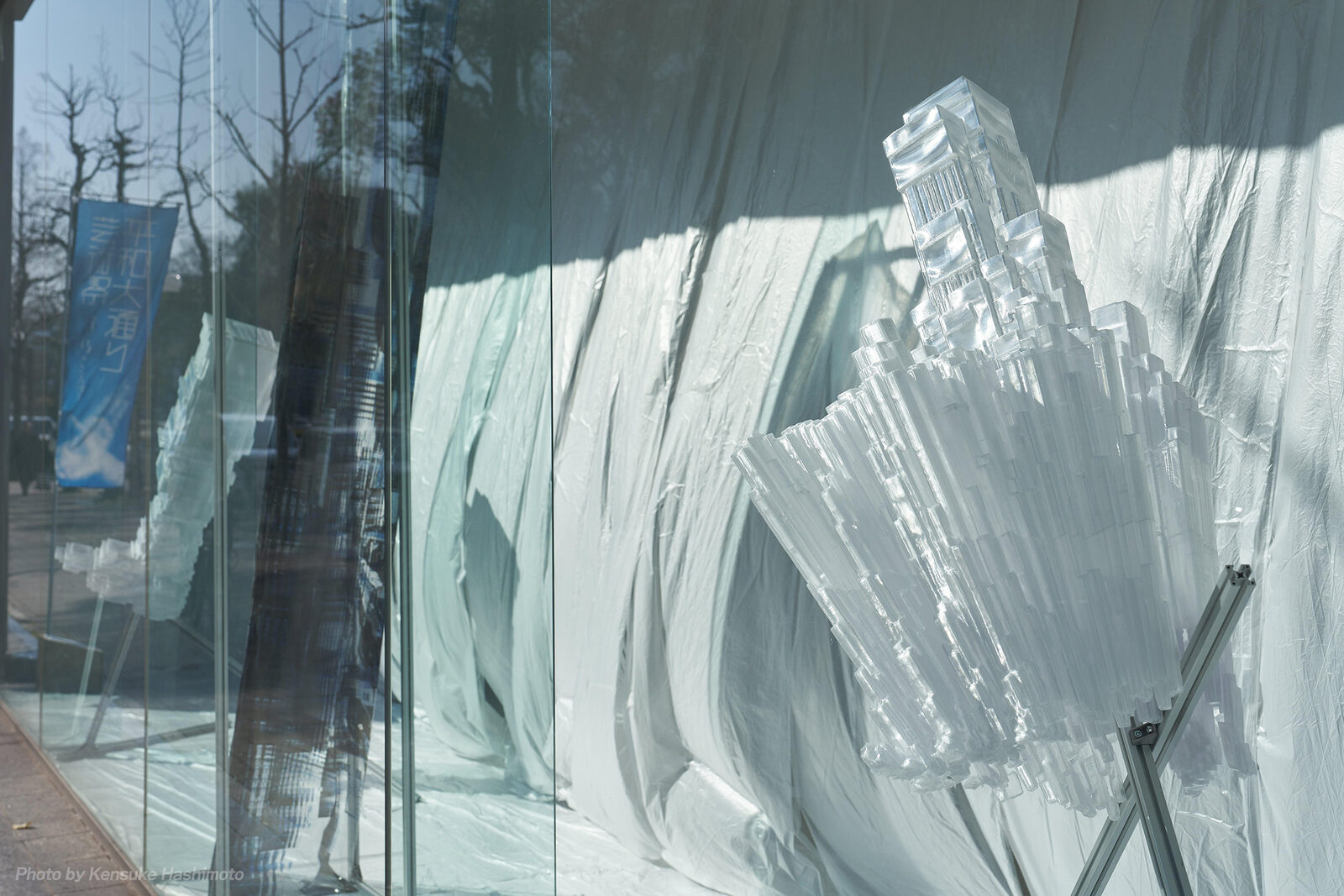
The title names two simultaneous readings of the city: the plateau, in Deleuze and Guattari's sense — a region of intensity sustained without climax — and the axis, the directional spine that organizes Hiroshima's reconstruction grid along Heiwa Odori.

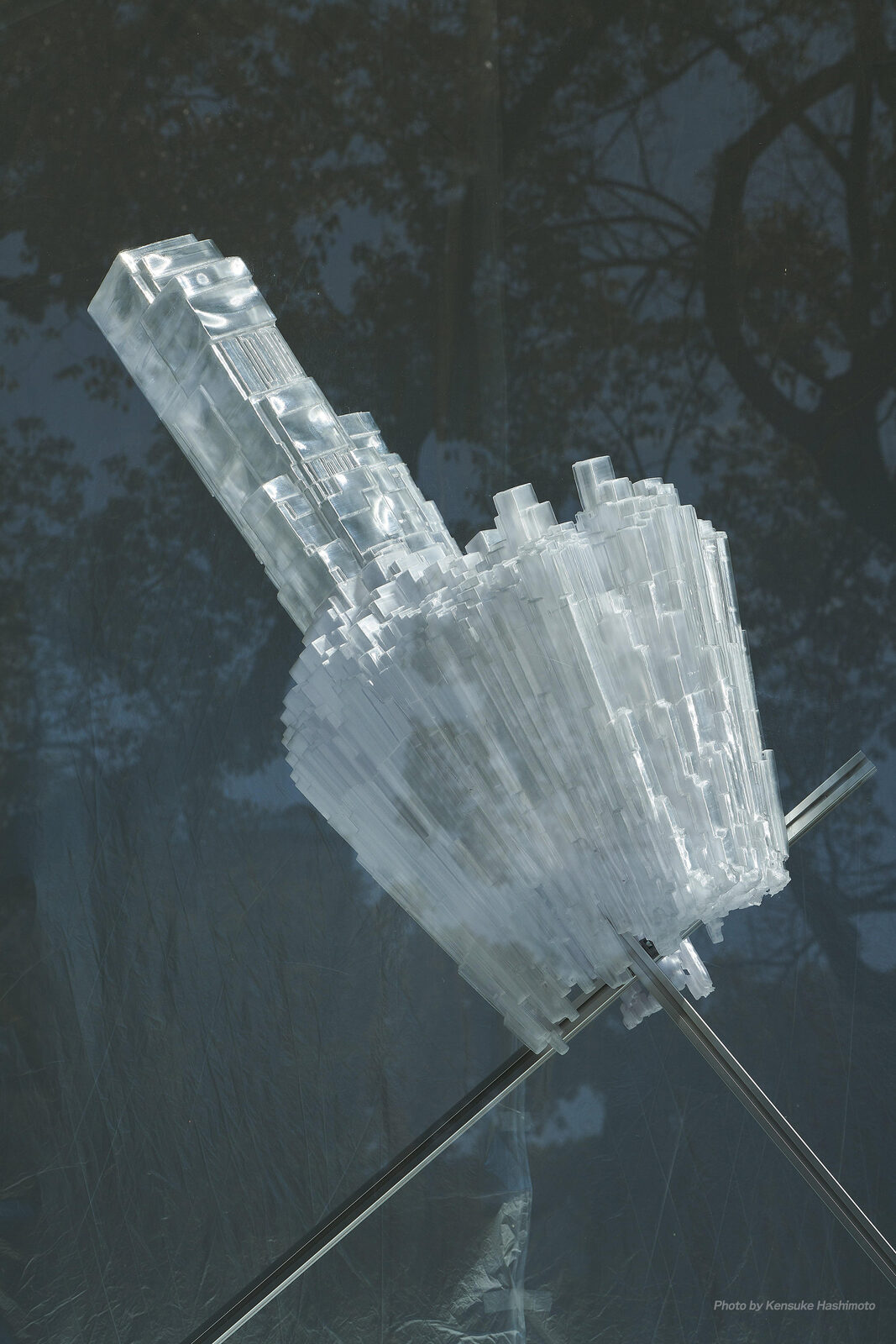
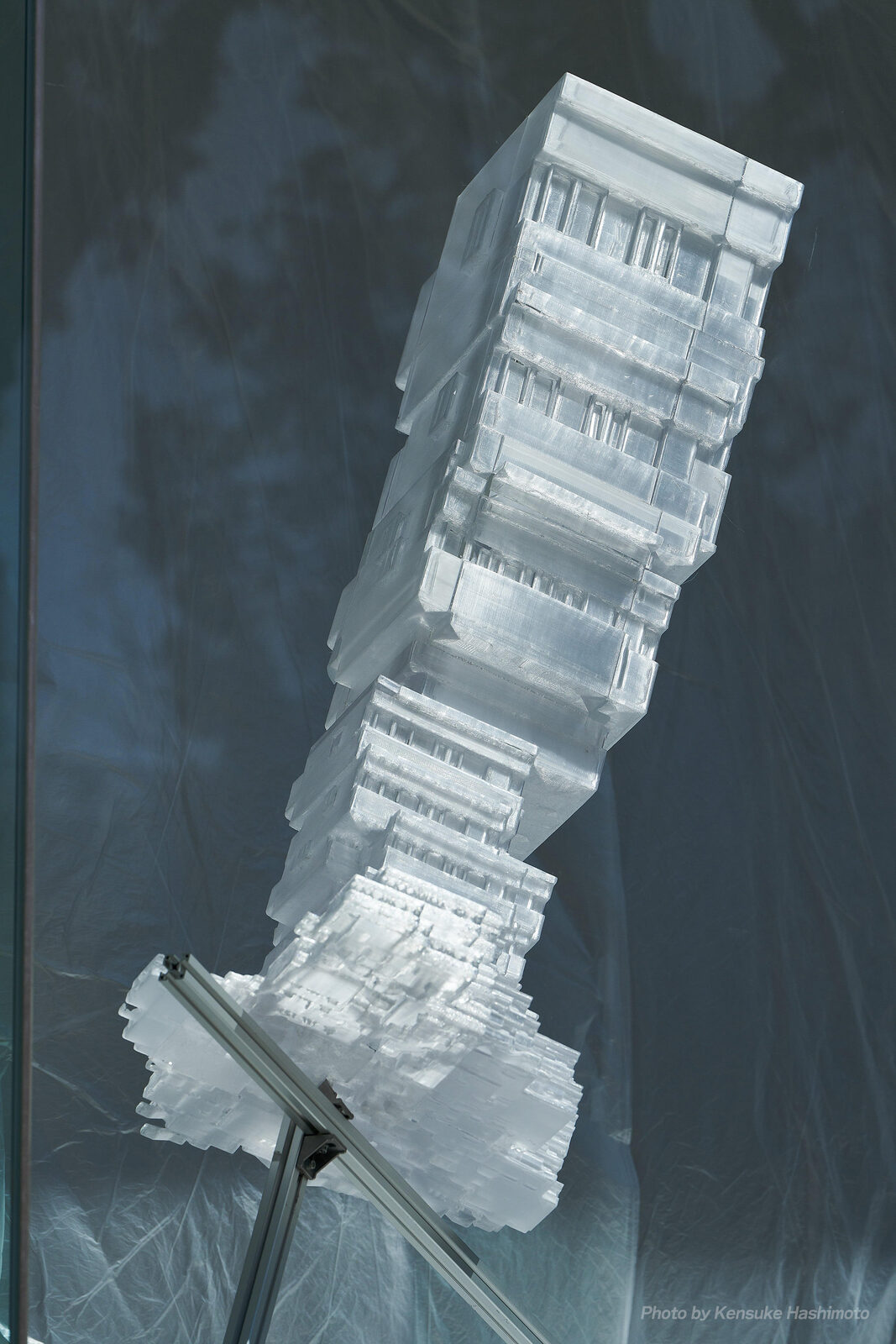
The work intersects pedestrian flow CSV data with PLATEAU 3D city model meshes, producing a form in which crowd density and built environment share the same crystalline geometry. The plateau is what does not resolve into peak; the axis is what does not bend into circle. In Hiroshima the two cross at a particular weight of memory.

Exhibited at the Former Bank of Japan Hiroshima Branch as part of the Heiwa Odori Art Festival, February 2026.

タイトルは都市の二つの同時的な読解を指す。プラトー——ドゥルーズとガタリの意味における、頂点を持たずに維持される強度の領域——そして軸(axis)——広島の復興都市計画において平和大通りに沿って展開される方向性の背骨。

本作は人口流動CSVデータとPLATEAUの三次元都市モデルメッシュを交差させ、群衆密度と建造物形態が同じ結晶幾何を共有する形を生成する。プラトーとは頂点へと解消されないものであり、軸とは円環へと曲げられないものである。広島においてこの二つは、ある特定の記憶の重みのもとで交差する。

2026年2月、旧日本銀行広島支店にて、平和大通り芸術祭の一部として展示。

Plateau / and / Axis — installation, Former Bank of Japan Hiroshima Branch
Plateau / and / Axis — crystal detail
Plateau / and / Axis — crystal, stacked tower form
Selected Past Works過去作 — 抜粋 2024 — 2020
KURE³-CaF₂ hero
Realised実現2024

KURE³-CaF₂

Kure, Hiroshima · Fluorite pseudomorph呉市・蛍石仮晶

Dimensions
400 × 298 × 267 mm
Medium
OpenStreetMap data, resin, urethane clear coatOpenStreetMapデータ、レジン、ウレタンクリアコート
Photography
Kensuke Hashimoto

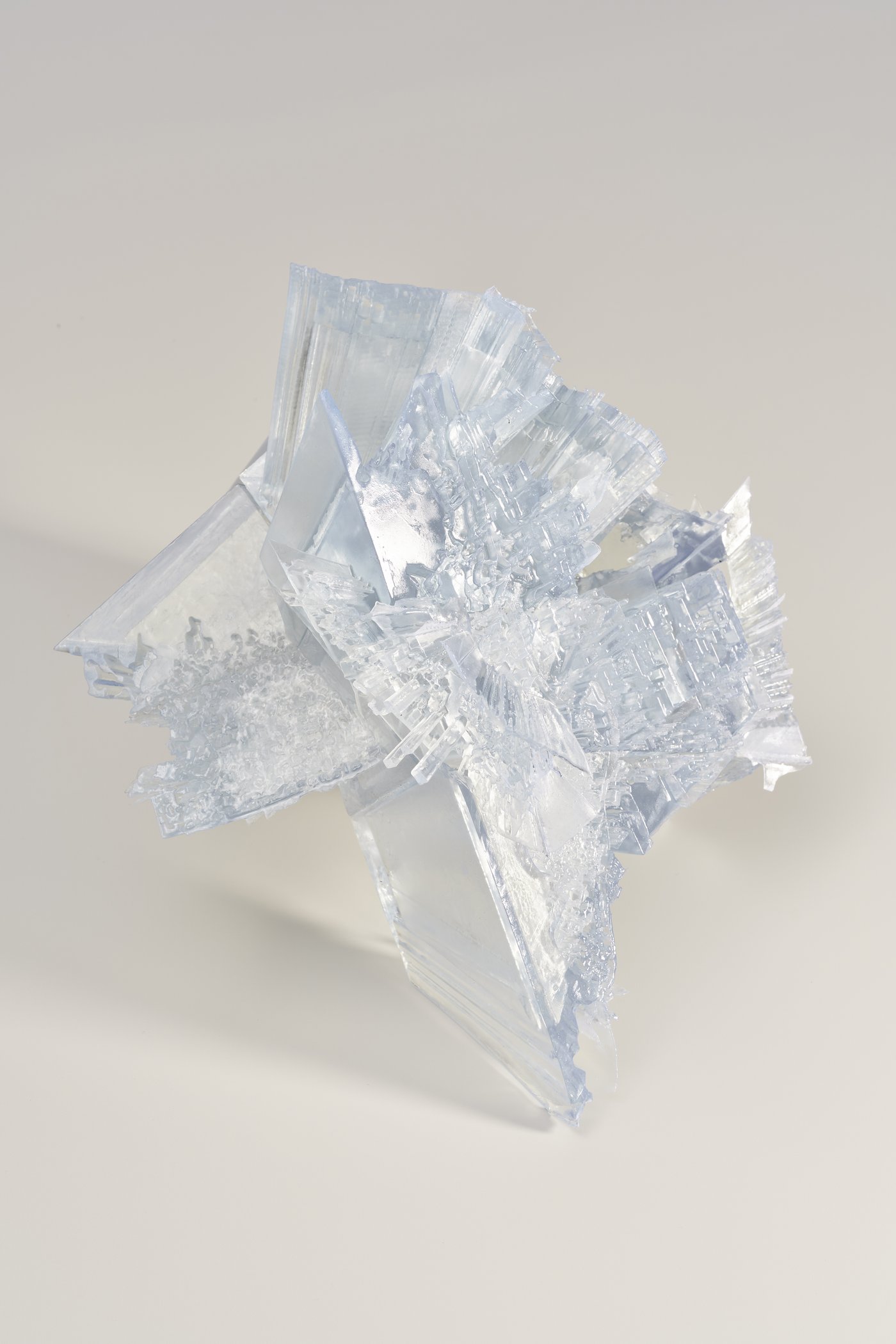
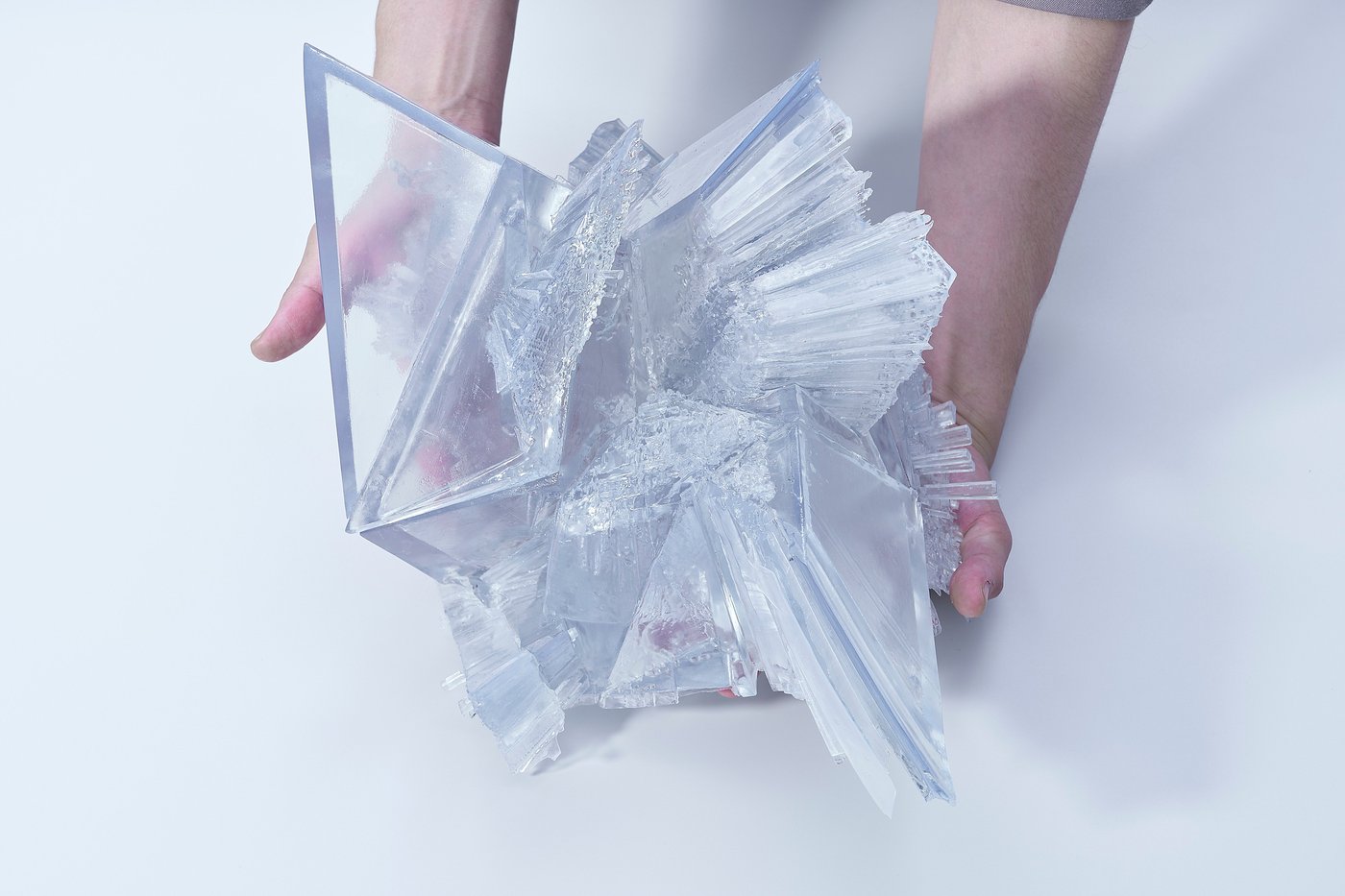
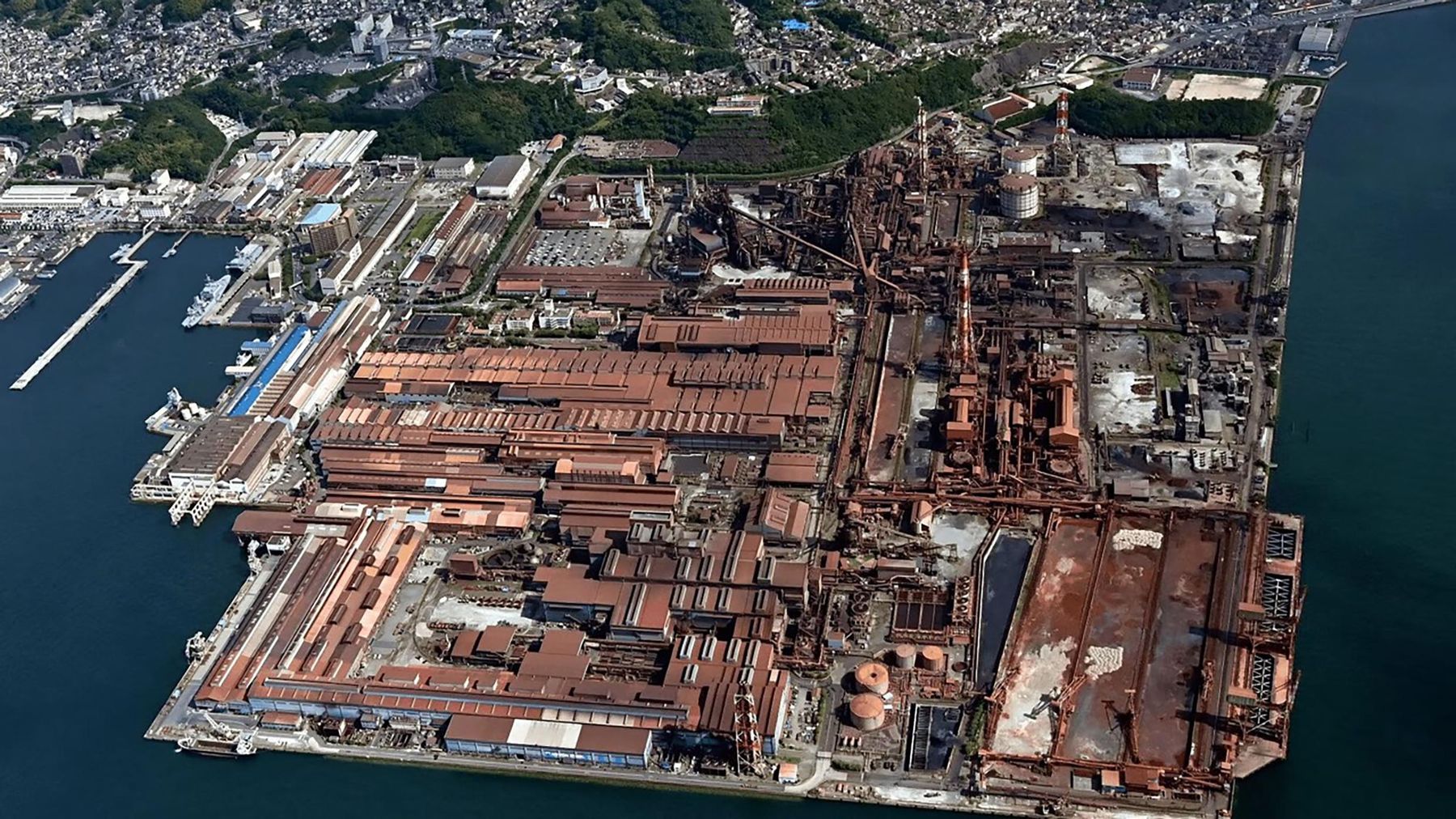
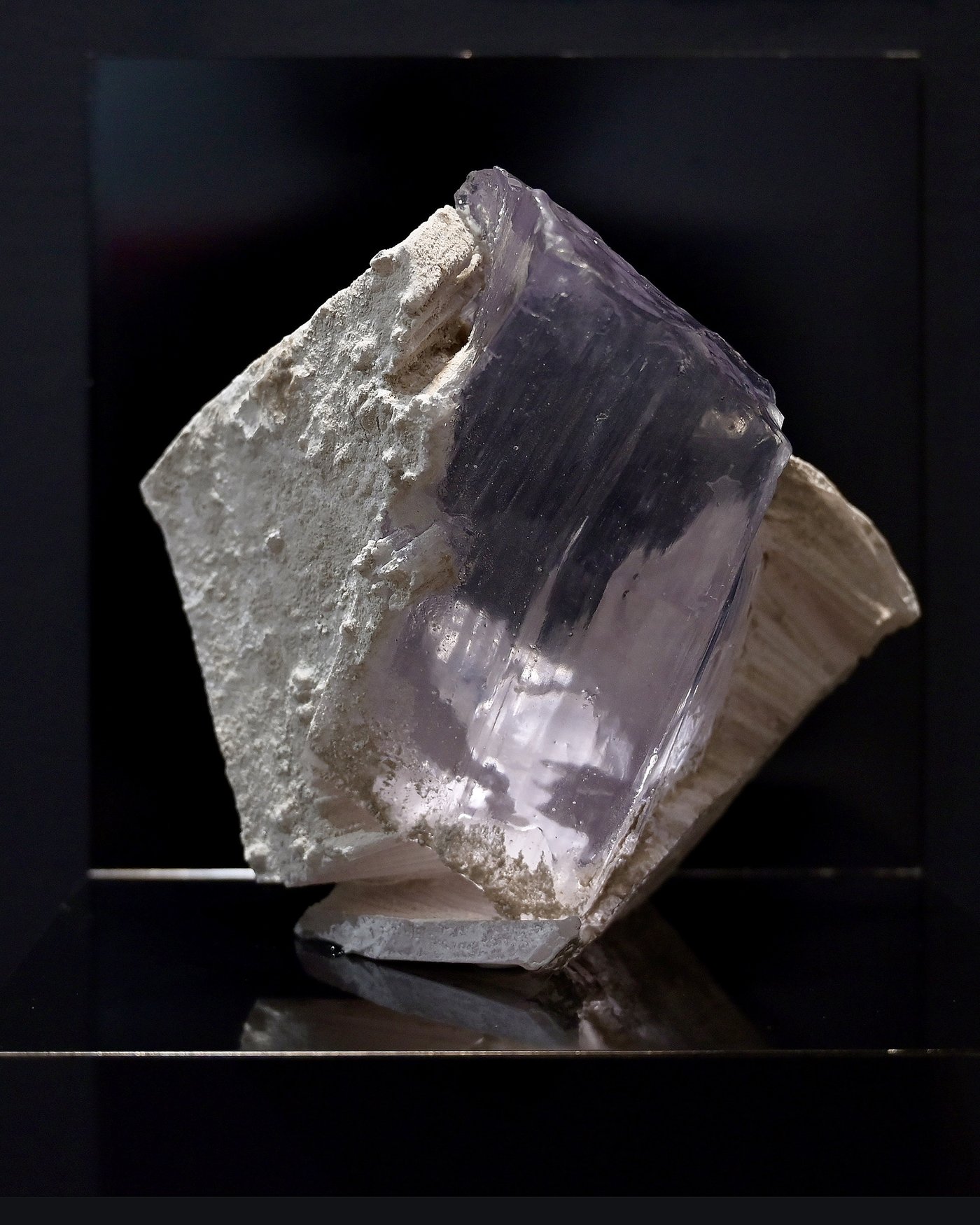
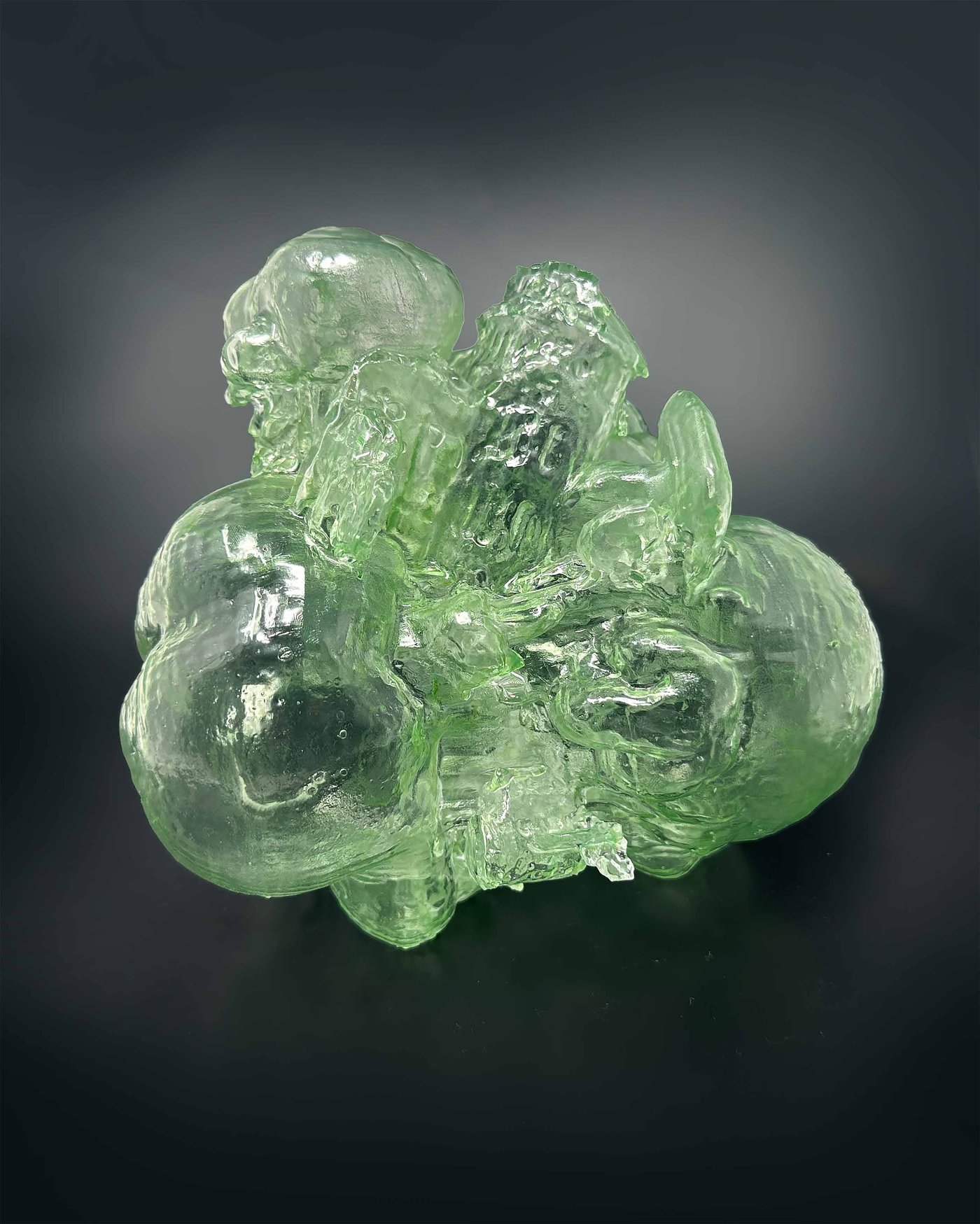
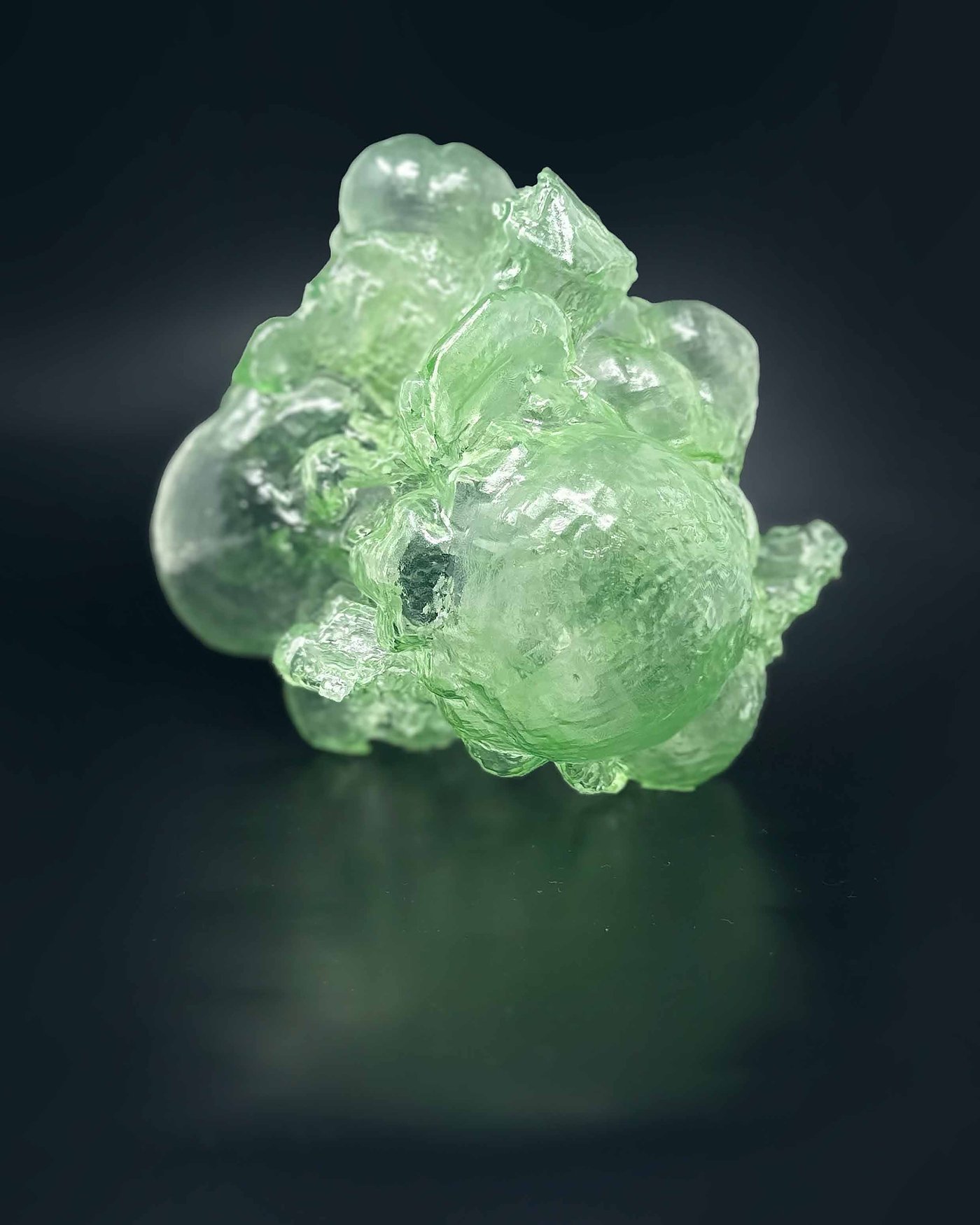
A response to Nippon Steel Kure Works' closure (2023). OSM city data translated into the crystal form of CaF₂ (fluorite). Clear resin with urethane coating.

日本製鉄呉地区閉鎖(2023)への応答。OSMによる呉市データをCaF₂(蛍石)の結晶形態に変換。透明レジン+ウレタンクリア。

KURE³ alternate angle
Scale reference, in hands
Nippon Steel Kure Works aerial
Nippon Steel Kure Works · ref.
Hakata³ installation overview
Realised実現2024

Hakata³ SeriesHakata³ シリーズ

Hakata Bay · SiO₂ + CaCO₃ + CaSO₄ + Sign_Hakata²博多湾・SiO₂+CaCO₃+CaSO₄+Sign_Hakata²

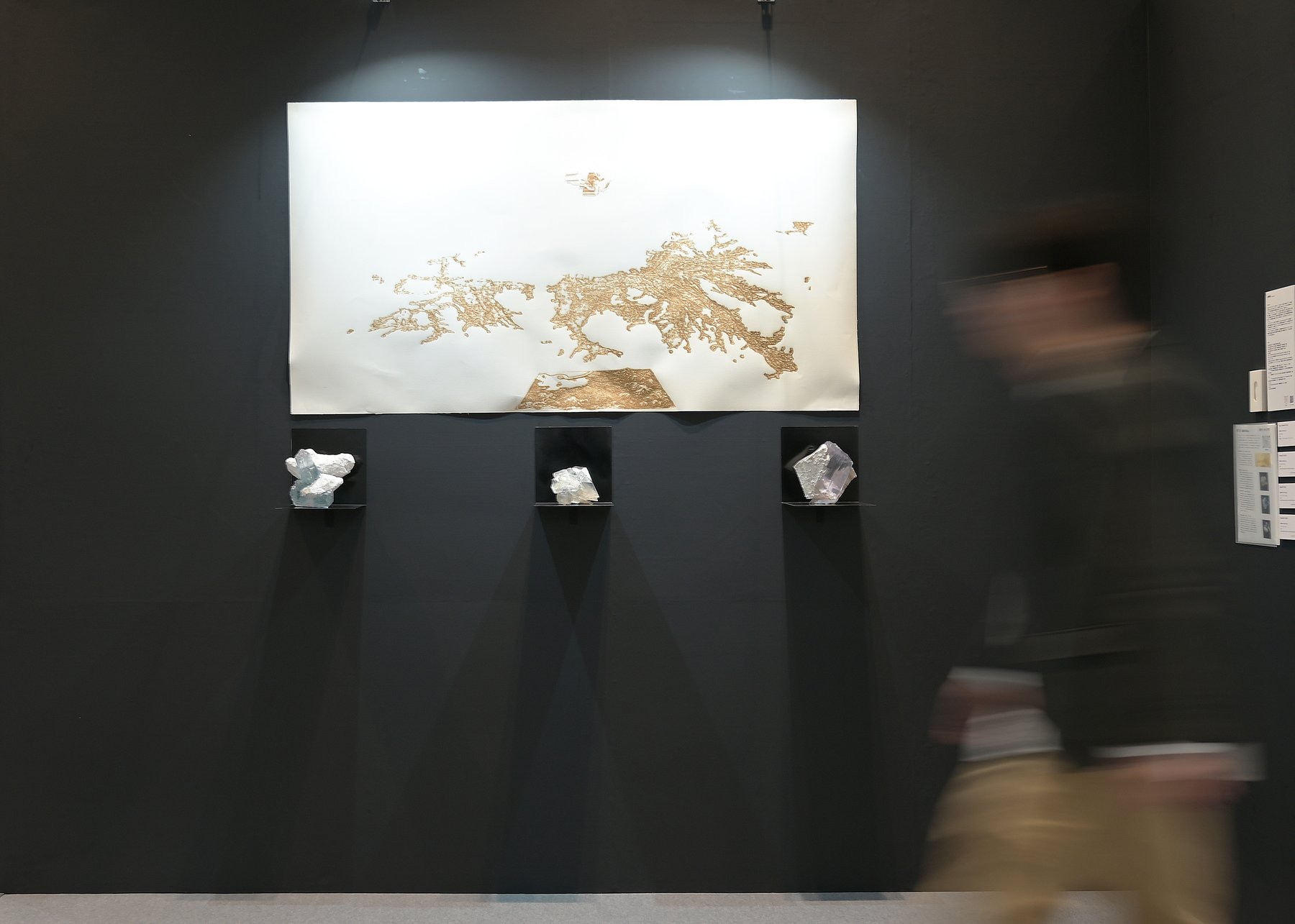
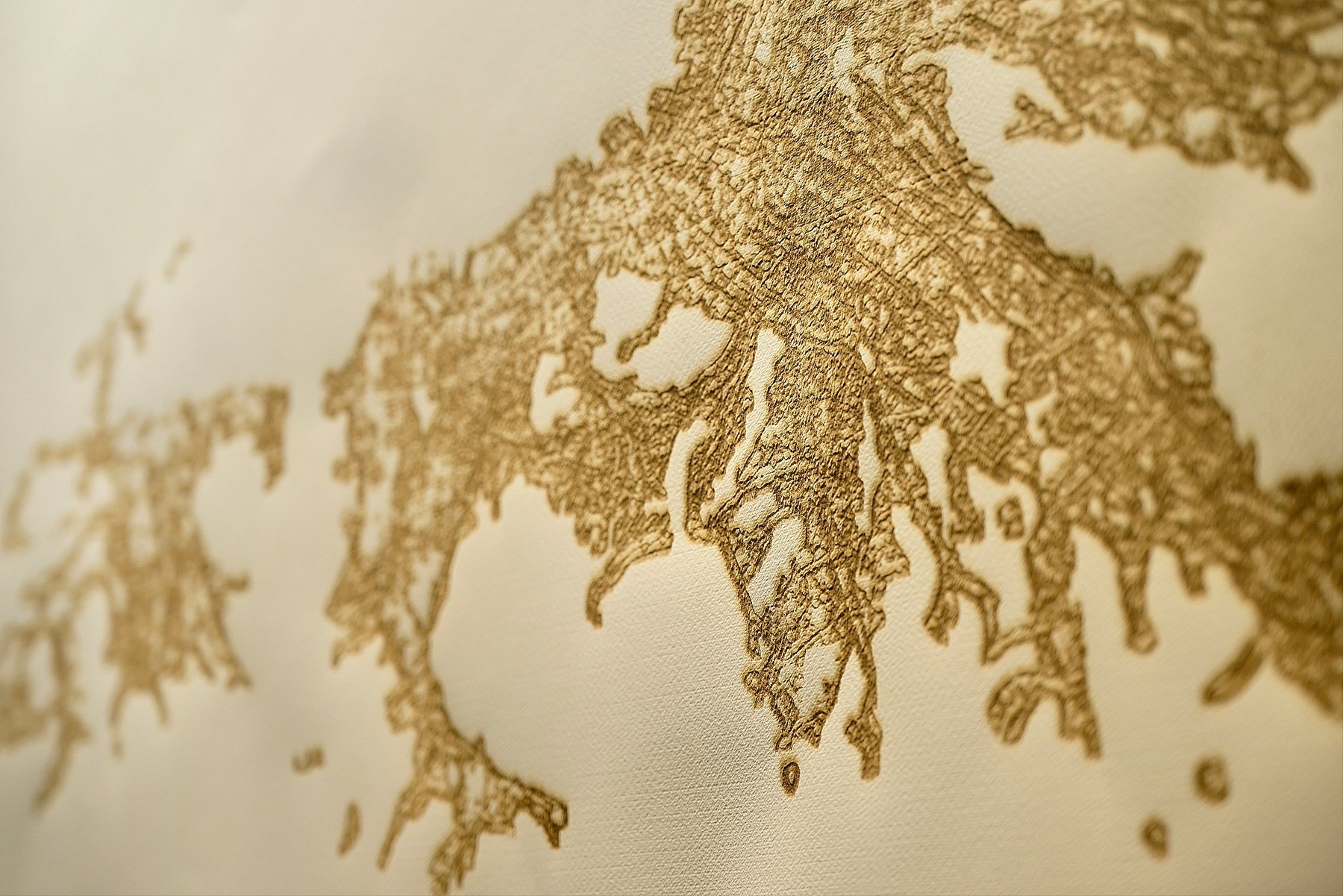
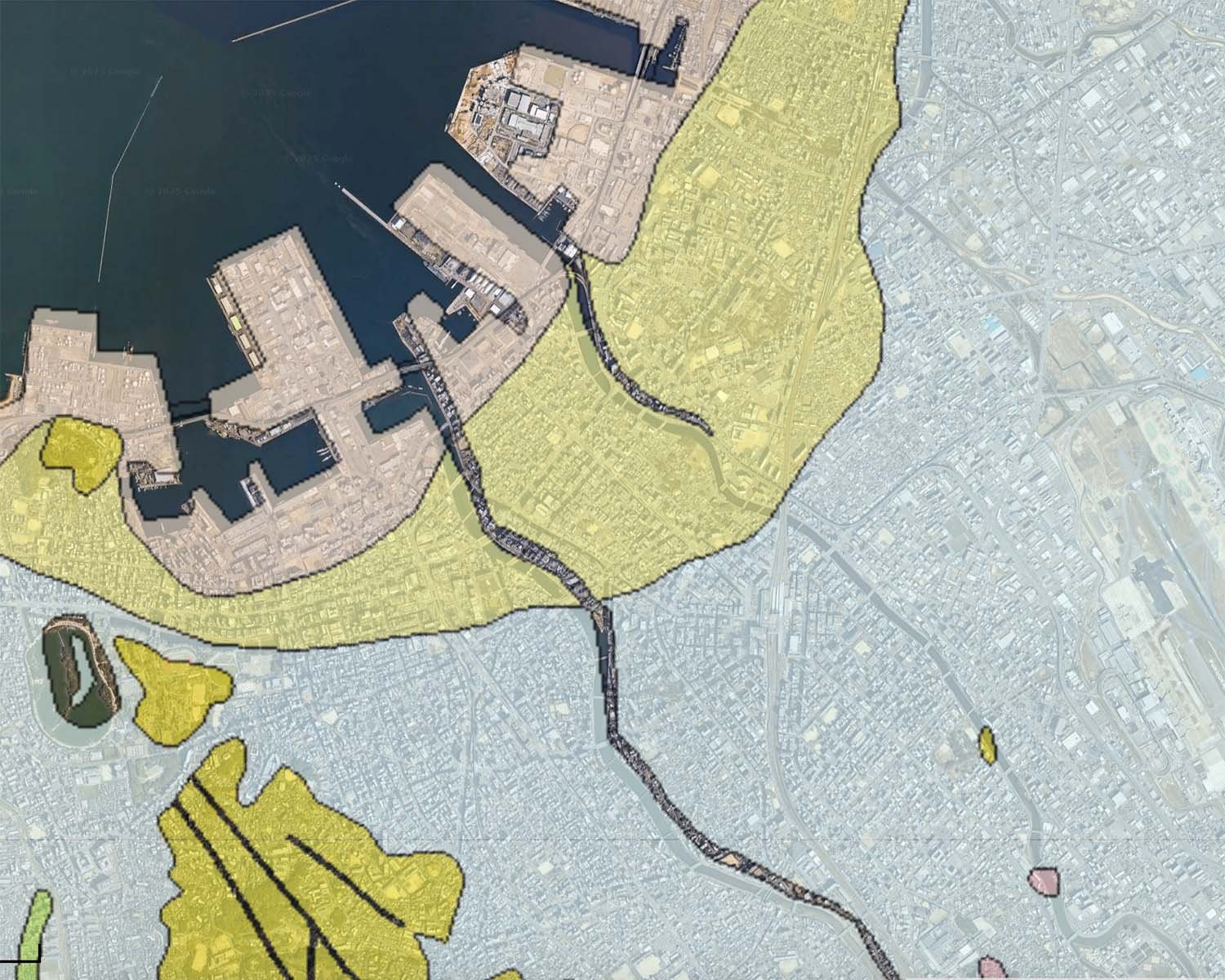
Geological data of soft-ground deposits along Hakata Bay overlaid with OSM, translated into three mineral forms — SiO₂, CaCO₃, CaSO₄. Accompanied by a laser-engraved stratum on paper (Sign_Hakata²).

博多湾沿岸の軟弱地盤データをOSMと重畳し、SiO₂・CaCO₃・CaSO₄の三種の鉱物形態へ変換。レーザー刻印による地層図紙面(Sign_Hakata²)を伴う。

Hakata³-SiO₂
Hakata³-SiO₂ · 196 × 230 × 122 mm
Hakata³-CaCO₃
Hakata³-CaCO₃ · 196 × 210 × 122 mm
Hakata³-CaSO₄
Hakata³-CaSO₄ · 160 × 210 × 122 mm
Sign_Hakata² engraving detail
Sign_Hakata²-SiO₂ · Laser-engraved paper, 90 × 300 cm
Hakata Bay soft-ground reference
Hakata Bay soft-ground data · ref.
Li-Ngatare³lepidolite hero
Realised実現2024

Li-Ngatare³lepidolite

Ambient_psychogeophysics_substances_series

Dimensions
196 × 122 × 210 mm
Medium
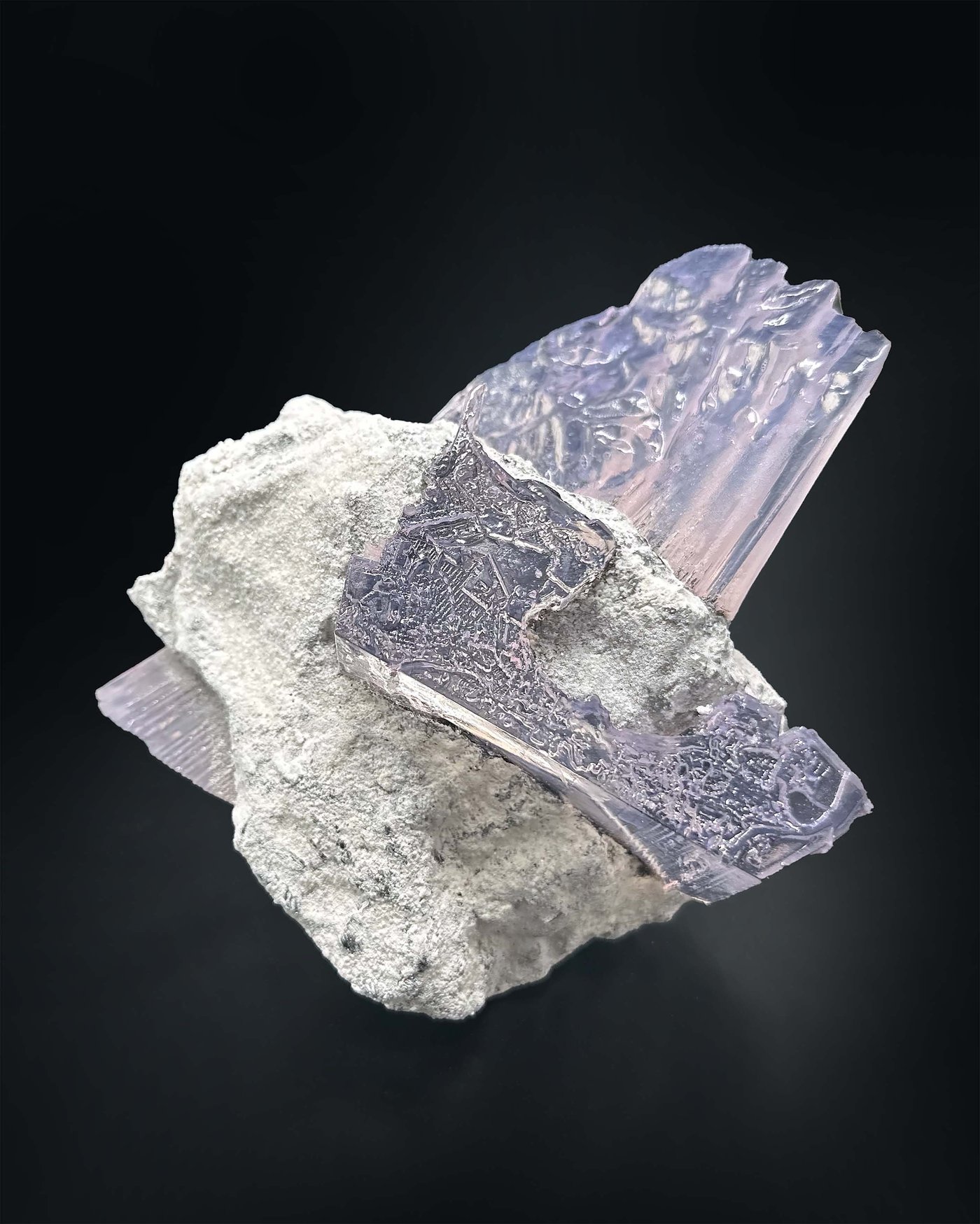
OSM, elevation data, 3D-scanned granite, resin, mineral pigmentOSM、標高データ、3Dスキャン花崗岩、レジン、鉱物顔料

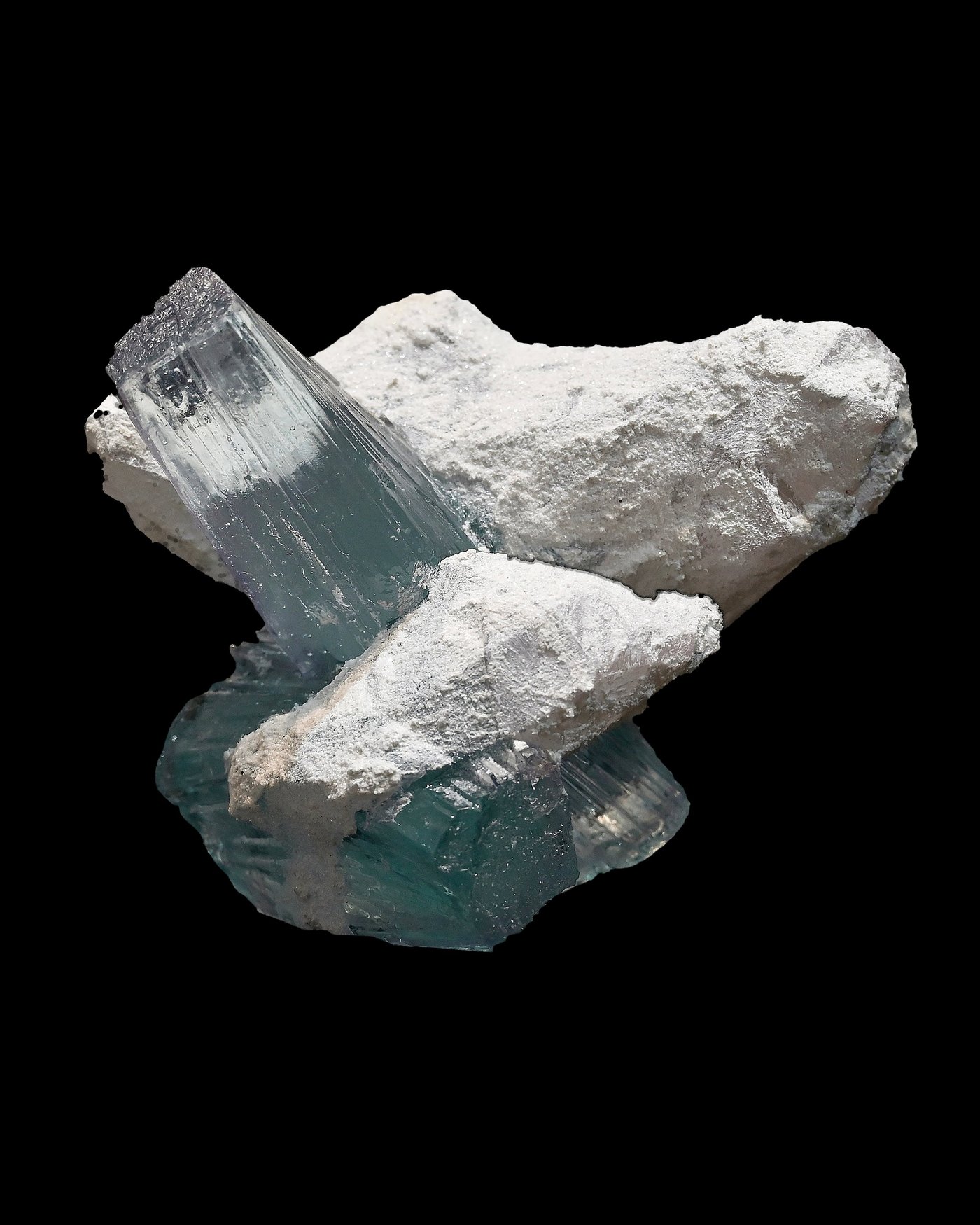
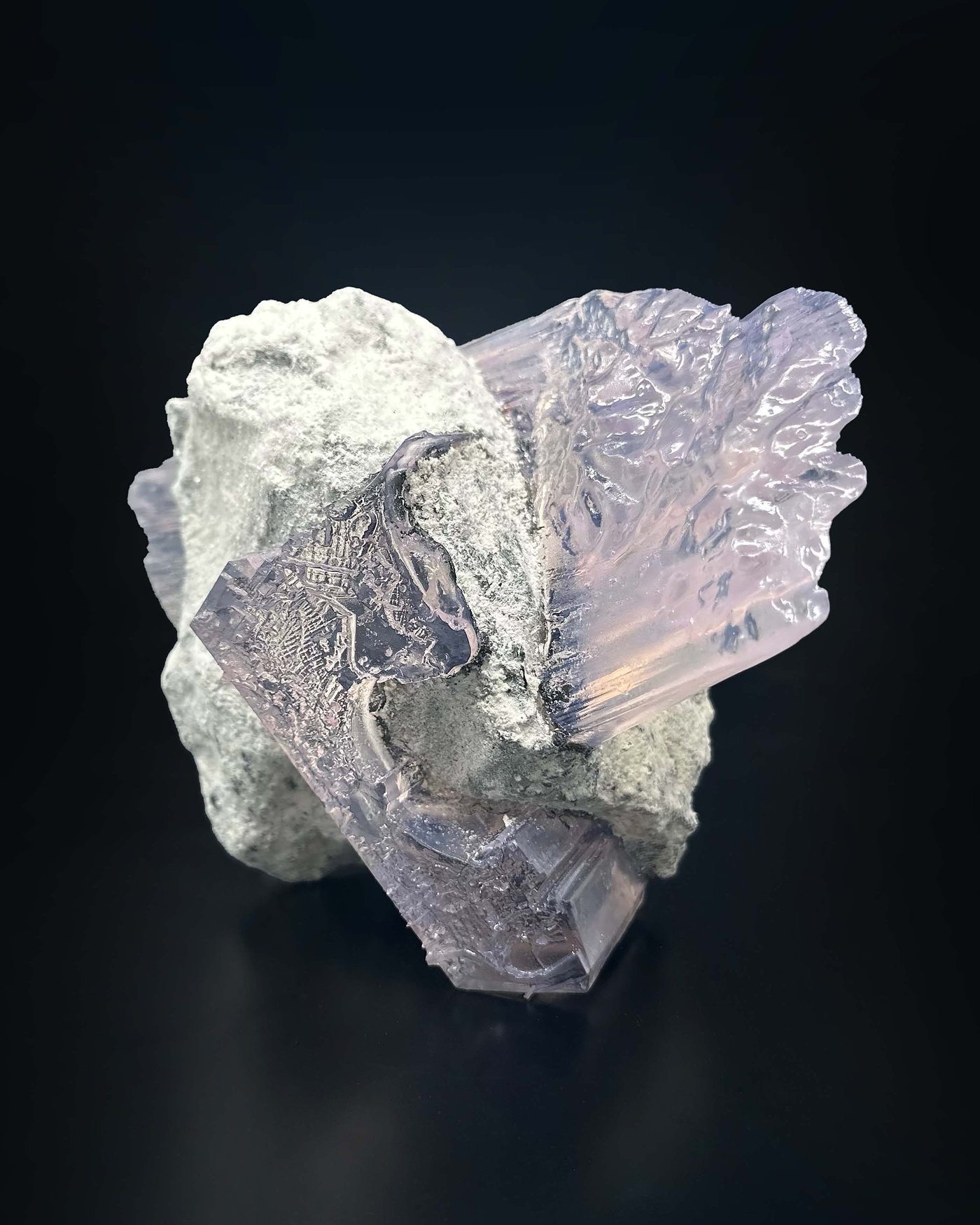
From the Ambient_psychogeophysics_substances_series. OSM, elevation data, and a 3D-scanned granite recomposed as a pseudomorph of lepidolite.

Ambient_psychogeophysics_substances_series。OSM・標高データと3Dスキャン花崗岩を、リチア雲母(lepidolite)の仮晶として再構成。

Li-Ngatare³lepidolite detail
FeS₂-Nakasu³pyrite hero
Realised実現2024

FeS₂-Nakasu³pyrite

Nakasu, Fukuoka · Pyrite中洲(福岡)・黄鉄鉱

Dimensions
123 × 113 × 101 mm
Medium
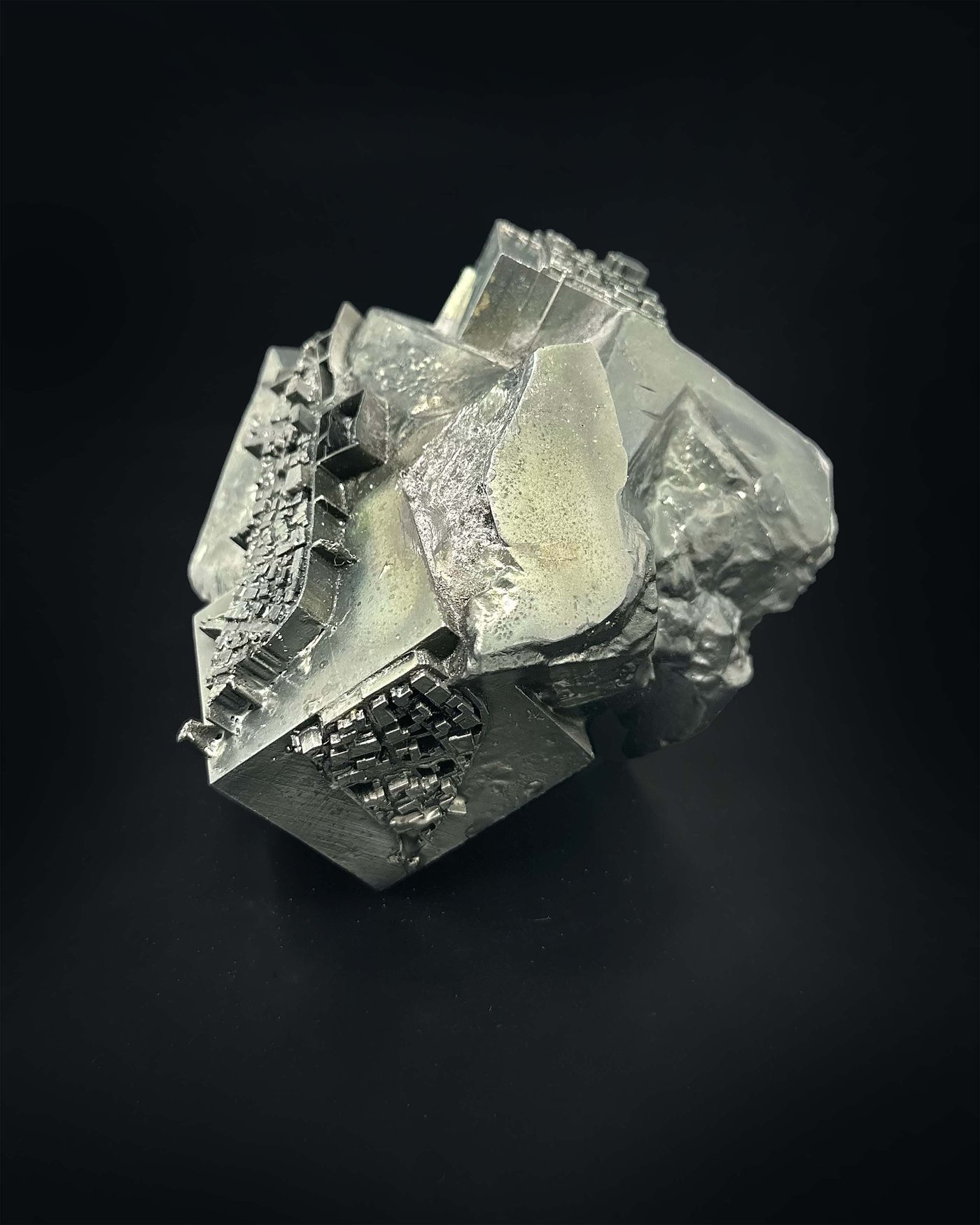
OSM data, resin, metal platingOSMデータ、レジン、メッキ

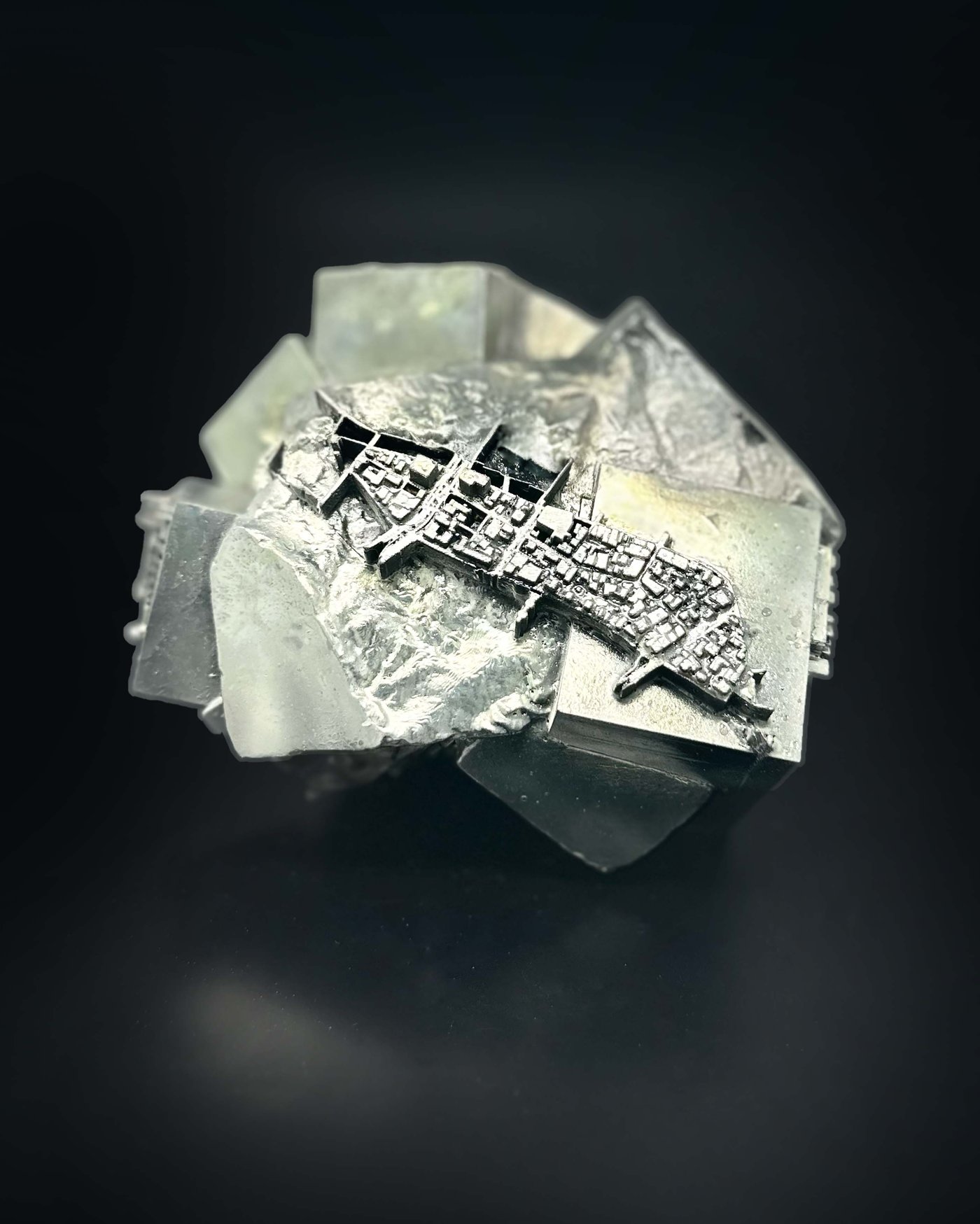
OSM data of Nakasu (Fukuoka) translated into the cubic form of pyrite (FeS₂). Resin with metal plating.

中洲(福岡)のOSMデータを黄鉄鉱(FeS₂)の立方晶へ変換。レジンにメッキ仕上げ。

FeS₂-Nakasu³pyrite detail
Hiroshimatite hero
Realised実現2024

Hiroshimatite

Hiroshima · Reconstructed as a new mineral広島・新規鉱物形態としての再構成

Dimensions
196 × 122 × 210 mm
Medium
3D-scanned Atomic Bomb Dome, blast simulation, photosensitive resin, paint, urethane原爆ドーム3Dスキャン、爆風シミュレーション、光硬化レジン、塗装、ウレタン

A 3D scan of the Atomic Bomb Dome subjected to blast simulation, reconstructed as a new mineral named "Hiroshimatite." Photosensitive resin.

広島の原爆ドームの3Dスキャンに爆風シミュレーションを重ね、新たな鉱物名「Hiroshimatite」として再構築。光硬化レジン。

Hiroshimatite texture detail
Pose // Pause 11:30-14:00 hero
Realised実現2020

Pose // Pause 11:30-14:00

Mito Peninsula Art Project, Shodoshima三都半島アートプロジェクト、小豆島

Dimensions
2300 × 1800 × 1800 mm
Medium
Wood, structural plywood, sumi ink木材、構造合板、墨

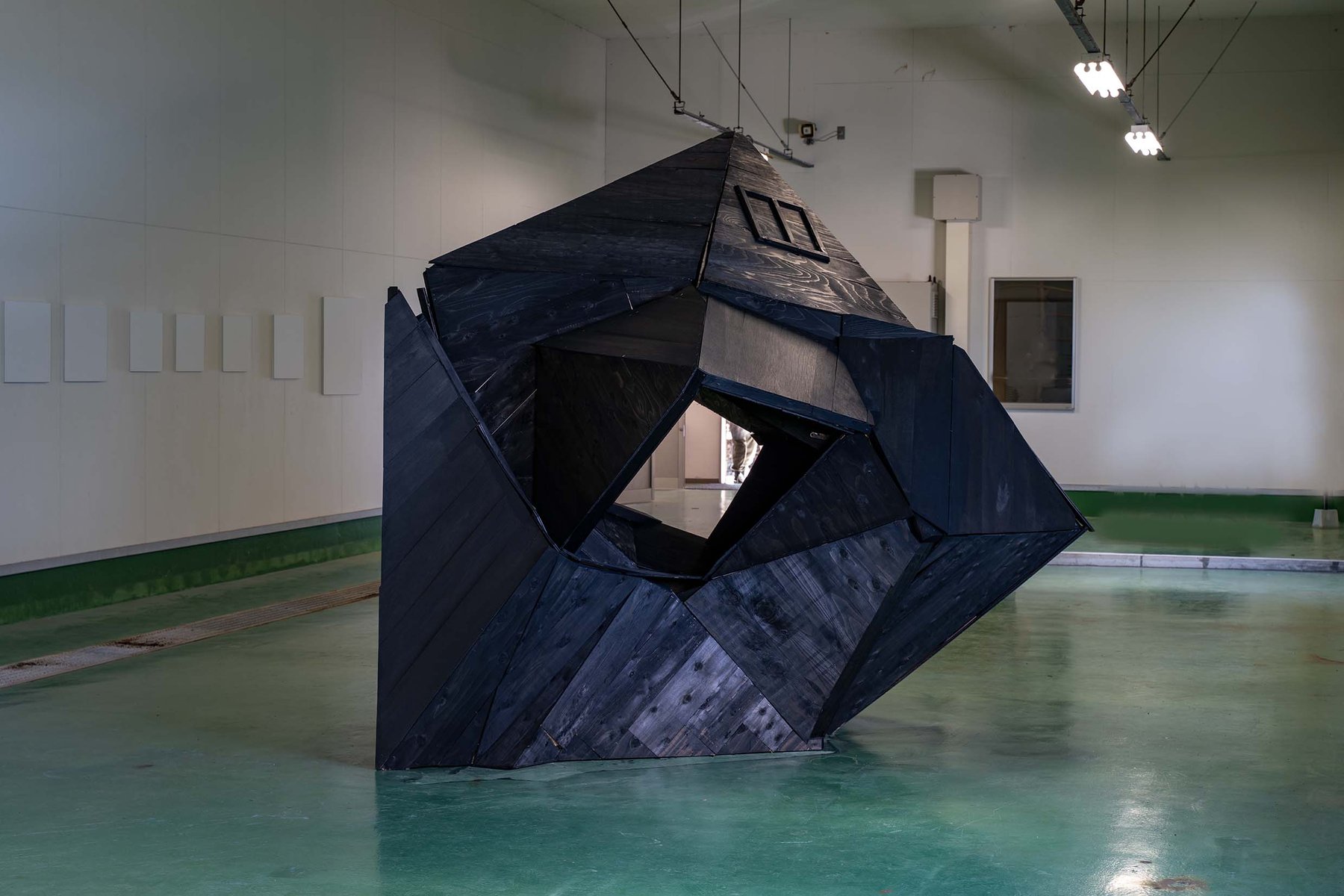
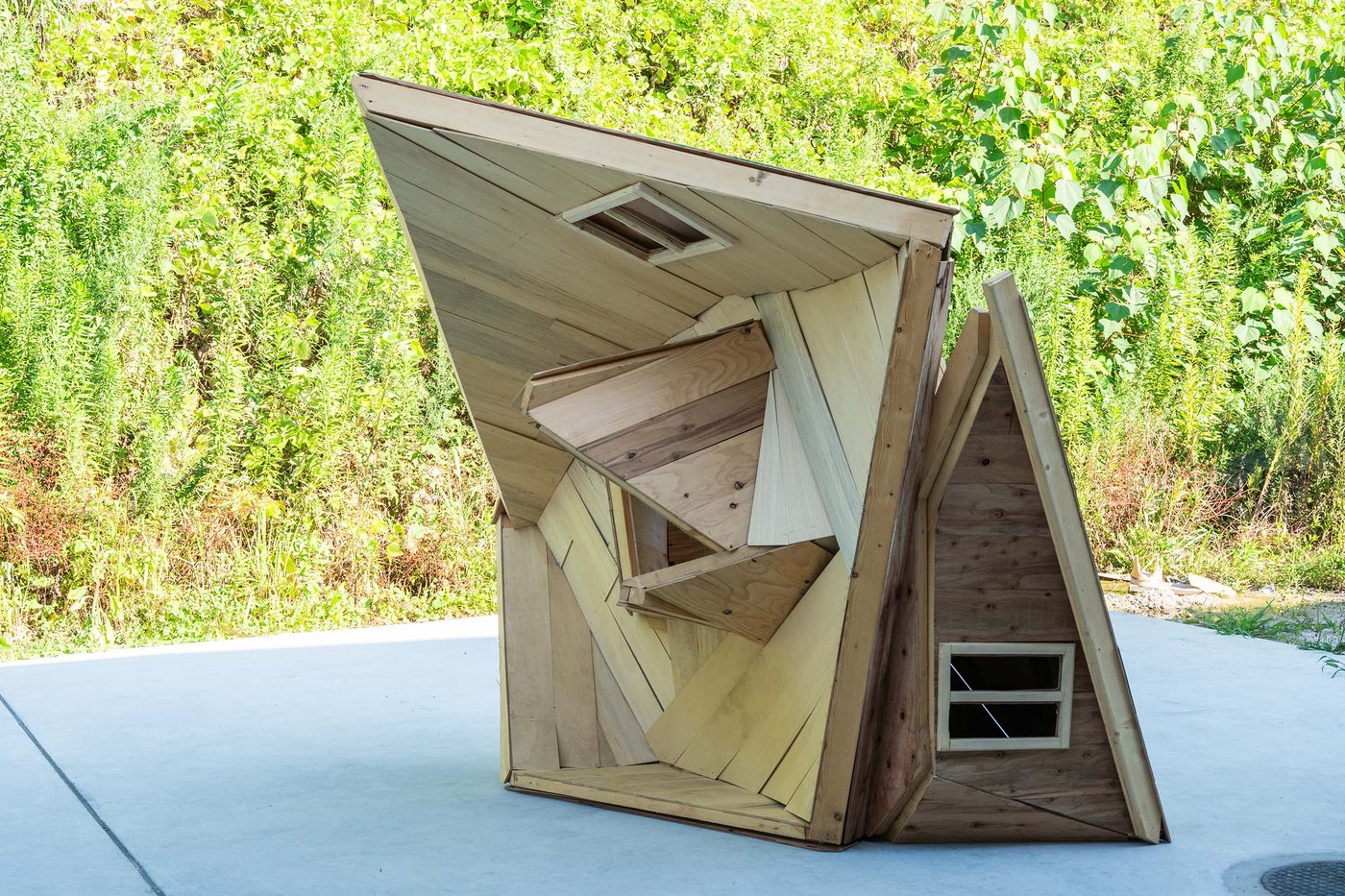
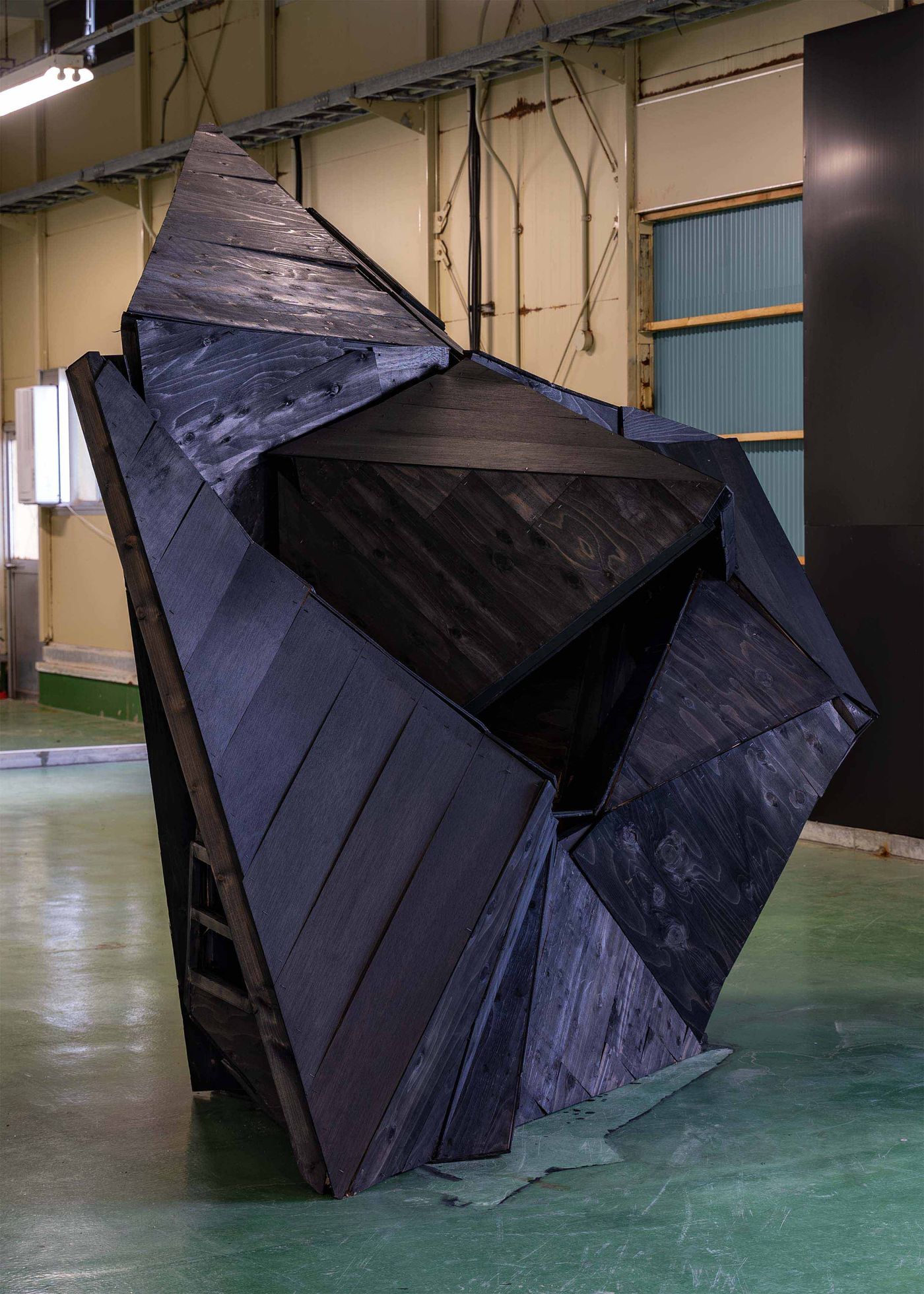
Mito Peninsula Art Project, Shodoshima (2020). The hours in the title mark the bounded spatio-temporality during which commuter suburbs empty out. Sumi-blackened structural plywood.

小豆島・三都半島アートプロジェクト(2020)。タイトルの時刻はベッドタウンが無人化する限定的な時空間性を指す。墨着色済の構造合板。

Pre-sumi natural wood state, Shodoshima
Side angle, sumi-blackened